
Key Takeaways
- Content without strategy does not scale. Well-written articles alone will not rank consistently. Search engines reward structured topic coverage, internal linking, and documented planning that builds topical authority over time.
- Search intent alignment drives both rankings and conversions. Your content must match what users are actually trying to accomplish, whether they want education, comparison, or to make a purchase decision.
- Topic clusters outperform isolated blog posts. Organizing content around pillar pages and supporting articles signals expertise to Google and prevents keyword cannibalization.
- Measurement is not optional. Organic traffic, rankings, engagement signals, and conversions must guide your decisions. Strategy evolves based on data, not assumptions.
- Authority compounds with consistency. High-quality content, proper on-page optimisation, and strong backlinks build momentum. The earlier you implement a structured SEO content strategy, the faster results accumulate.
Quality content that satisfies user intent directly impacts search engine rankings, user engagement, and authority within your niche. This is why content sits at the core of most successful SEO strategies.
But content alone isn’t enough. Without a documented SEO content strategy guiding your efforts, even well-written articles struggle to gain traction. Search engines reward structure, consistency, and topical authority. Isolated blog posts may cover valuable topics, but they won’t build the interconnected web of content that signals expertise to Google.
An effective SEO content strategy aligns what your target audience searches for with what your business offers. It transforms scattered publishing into a systematic approach that compounds over time.
This guide covers everything you need to build and execute an SEO content strategy that drives organic traffic and conversions. You’ll learn how to conduct keyword research, plan content around topic clusters, optimize for search engines, and measure results against key performance indicators.
What is an SEO Content Strategy?
An SEO content strategy is a documented plan that guides how you create, organize, and optimize content to rank higher in search engines and achieve your business goals.
Think of it as the blueprint that connects two things: what your audience wants to find and what you want them to do once they find you.
The strategy defines who you’re targeting, what information you’ll provide, how you’ll structure it, and what success looks like. Without this framework, you’re essentially throwing content at the wall and hoping something sticks.
Search engine optimization and content creation are two sides of the same coin. SEO helps search engines understand your content. Content gives search engines something valuable to show users. Your content strategy brings both elements together in a way that compounds over time.
A solid SEO content strategy typically addresses several key elements. It identifies your target audience and their pain points. It maps out the topics and relevant keywords you’ll pursue. It establishes how different pieces of content connect through internal linking. And it sets up key performance indicators to measure progress.
The businesses that get this right don’t just attract more organic traffic. They attract the right traffic. People who are actively searching for solutions end up on their web pages, leading to higher conversion rates and better ROI for content marketing efforts.
What is an SEO Content Strategist?
An SEO content strategist is the person responsible for aligning content creation with SEO best practices to meet business goals. They bridge the gap between what audiences search for and what brands publish.
This role goes beyond writing blog posts or optimizing meta descriptions. A content strategist thinks about the bigger picture. They develop frameworks, plan editorial calendars, and analyze performance data to refine the approach over time.
Core Responsibilities of an SEO Content Strategist
- Conducting keyword research is a major part of the job. This involves identifying target keywords and understanding the search intent behind each query. A strategist doesn’t just chase high search volume terms. They find opportunities where the business can realistically compete and win.
- Content planning and ideation comes next. This means building a content calendar that addresses different stages of the buyer journey. The strategist decides what blog content to create, which existing content needs updating, and how to prioritize resources for maximum impact.
- On page optimization falls under their purview as well. They make sure each piece of content follows on-page SEO best practices. This includes optimizing page titles, crafting compelling meta descriptions, using proper header structures, and adding image alt text.
- Performance analysis rounds out the role. A strategist tracks how content performs in Google Search Console, monitors search engine rankings, and measures against key performance indicators. They use tools like Google Analytics to understand what’s working and what needs adjustment.
The best SEO content strategists combine analytical skills with creative thinking. They understand how search engine algorithms evaluate content. But they also know how to tell stories that resonate with human readers. That balance is what separates high-quality content from generic filler that nobody wants to read.
Why Your Business Needs an SEO Content Strategy
Google drives nearly 93% of all web traffic. Your potential customers are searching for solutions every single day. The question is whether they find you or your competitors.
An SEO content strategy positions your brand along each step of the buying cycle. It builds relationships with potential customers by providing value before they ever reach out for a quote or demo.
The Benefits of a Documented Strategy
- Structure beats randomness. Without a content strategy, your ideas lack organization. A documented plan transforms intuition into actionable steps that your whole team can follow. Everyone knows what to create, when to publish, and how each piece connects to larger goals.
- You develop a unique market position. There’s an overwhelming amount of content online. A content strategy helps you define your own voice and angle. This sets your brand apart from competitors who all sound the same.
- Resources get focused on what matters. Time and budget are limited. A strategy helps you prioritize content creation efforts around topics that actually move the needle for your business. You stop wasting energy on content that doesn’t align with your business goals.
- Results become measurable. When you have clear key performance indicators tied to your content marketing strategy, you can track progress and prove ROI. This makes it easier to justify continued investment in content.
What Happens Without a Strategy
Businesses that skip the strategy phase typically run into the same problems. They create content that targets the wrong keywords. They publish blog posts that compete for the same search queries. They ignore search intent and wonder why visitors bounce immediately.
The worst outcome? You invest months of effort into content that never generates organic traffic because it wasn’t built with search engines in mind from the start.
The 5 Pillars of Content Strategy
While SEO has its four pillars, a comprehensive content strategy has its own foundational elements. These five pillars guide how you plan, create, and measure content performance.
1. Audience and Intent Alignment
Everything starts with understanding who you’re creating content for. You need clarity on your target audience, their pain points, and what they’re trying to accomplish when they search.
Search intent matters enormously here. Someone searching “what is SEO” has different needs than someone searching “SEO services pricing.” The first person wants education. The second wants to make a buying decision. Your content needs to match the intent behind each search query.
Building buyer personas helps with this alignment. Document who your ideal customers are, what challenges they face, and what questions they ask at each stage of their journey. This research directly informs your keyword strategy and content planning.
2. Topic and Keyword Prioritization
Once you understand your audience, you need to identify the topics that will generate the best return on your content investment.
Not all keywords are created equal. Some have massive search volume but impossible competition. Others have lower volume but much higher conversion potential. Effective keyword research balances opportunity against difficulty.
A helpful framework here is Keyword Opposition to Benefit analysis. This approach compares how hard it is to rank for a keyword against the business value of that traffic. You end up prioritizing topics where you can realistically compete and where ranking actually drives meaningful results.
Grouping keywords into themes also helps. Rather than chasing individual phrases, you build topic authority by covering related search queries comprehensively. This signals to search engines that you’re an authoritative source on the subject.
3. Content Mapping and Planning
With your topics identified, you need to plan how different content pieces connect and support each other.
The topic cluster model works well here. You create pillar pages that provide a broad overview of major topics. Then you build out supporting blog posts that dive deeper into specific subtopics. Internal linking ties everything together and helps search engines understand the relationship between pages.
Your content calendar should account for several factors. What’s the priority based on business impact? What resources are required to create each piece? Are there seasonal topics that need to be published at specific times? How does new content support or update existing content?
4. Content Creation and Optimization
This pillar covers the actual process of producing and optimizing content. Quality matters far more than quantity.
Each piece of content should have a clear purpose. Is it meant to rank for a specific keyword? Drive leads? Support sales conversations? Build thought leadership? The purpose dictates how you approach writing SEO content.
On page optimization happens during this phase. You’re incorporating target keywords naturally, structuring content for readability, and making sure technical elements like meta descriptions and image alt text are in place.
But optimization shouldn’t compromise the reader’s experience. Write for humans first. Help search engines understand your content. If you have to choose between awkward keyword stuffing and natural language, always choose natural language.
5. Measurement and Iteration
The final pillar involves tracking performance and continuously improving your approach.
Key metrics to monitor include organic traffic, search rankings for target keywords, user engagement signals, and conversions. Google Analytics and Google Search Console provide most of the data you need.
But measurement isn’t just about tracking numbers. It’s about understanding what those numbers tell you. Which topics are resonating with your audience? Which pages are underperforming and why? What content gaps exist that you should fill?
The best content strategies evolve based on data. You double down on what works. You fix or retire what doesn’t. And you stay alert to changes in search behavior and algorithm updates that might require adjustments.
How to Build an Effective SEO Content Strategy: Step by Step
This is where strategy turns into action. The steps below outline how to build an SEO content strategy that supports rankings, traffic, and conversions. The same framework applies whether you are launching new content or correcting an existing setup.
Step 1: Define Your Business Goals and Target Audience
Before touching anything related to keywords or content, get clear on what you’re trying to achieve.
What are your business goals for content marketing? Are you trying to generate leads? Build brand awareness? Support sales with educational resources? Reduce customer support inquiries? Different goals require different content approaches.
Then define your target audience with specificity. Generic descriptions like “small business owners” aren’t helpful. You need to understand what industries you serve, what challenges those businesses face, and what questions they ask when searching for solutions.
Talk to your sales team. Review customer support tickets. Conduct interviews with existing customers. The more you understand about your audience’s pain points and search behavior, the better your content strategy will perform.
Step 2: Conduct a Content Audit
If you have existing content, audit it before creating anything new. You might be sitting on assets that just need optimization. Or you might have content that’s actively hurting your search performance.
A content audit evaluates every page on your site for several factors:
- Current traffic and search rankings
- Technical issues like broken links or missing meta descriptions
- Content quality and depth
- Whether the content still aligns with your current offerings
- Opportunities to update, combine, or remove pages
This process often reveals quick wins. Maybe you have a blog post ranking on page two for a valuable keyword. A focused optimization effort could push it to page one. That’s faster and cheaper than creating something from scratch.
The audit also helps you avoid duplicating effort. If you already have content covering a topic, you don’t need to write it again. You might need to improve it, but you’re not starting from zero.
Step 3: Perform Keyword Research
With your goals defined and existing content assessed, you’re ready to research keywords and topics.
Start by brainstorming seed terms related to your business. What would someone type into Google search if they were looking for your products or services? What questions do your customers frequently ask?
Then use keyword research tools to expand that list and gather data. Popular options include Google Keyword Planner, Ahrefs, SEMrush, and Moz. These tools show monthly search volume, keyword difficulty, and related search queries.
Look for the intersection of relevance, search volume, and achievability. You want keywords that:
- Relate directly to your business
- Have enough search volume to be worth pursuing
- Aren’t so competitive that ranking is unrealistic
Pay close attention to search intent. Group keywords by what the searcher is trying to accomplish. Informational queries want education. Transactional queries want to take action. Your content needs to match the intent to satisfy both users and search engines.
Step 4: Map Keywords to Content Types
Different keywords and intents call for different content formats.
High-level educational queries often work best as comprehensive guides or pillar pages. These pages cover a topic broadly and link out to more specific supporting content.
Specific how-to queries might be better served by detailed blog posts that solve a single problem. Product comparison queries might need dedicated landing pages.
Map each keyword cluster to the content type that makes the most sense. Consider what’s already ranking for those terms. If Google is showing video results, maybe you need video content. If listicles dominate the search engine results pages, that format might be your best bet.
Also map content to stages in the buyer journey. Top-of-funnel content educates people who are just discovering they have a problem. Middle-of-funnel content helps them evaluate solutions. Bottom-of-funnel content convinces them to choose you specifically.
Step 5: Build Topic Clusters
Rather than creating isolated pages, organize your content strategy around topic clusters.
A topic cluster starts with a pillar page that broadly covers a major theme. For a dental practice, this might be a comprehensive guide to cosmetic dentistry. For a cybersecurity company, it might be an ultimate guide to data protection.
Then you create content around related subtopics. Each cluster page links back to the pillar. The pillar links out to all cluster pages. This internal linking structure helps search engines understand the relationship between your content and signals that you’re an authority on the topic.
Topic clusters offer several advantages. They prevent you from creating competing pages that target the same keyword. They build topical authority faster than random publishing. And they create clear navigation paths for visitors who want to learn more.
Step 6: Develop a Content Calendar
With your strategy mapped out, create a content calendar that turns plans into action.
Your calendar should include:
- What content you’re creating
- Who’s responsible for each piece
- Target publication dates
- Target keywords for each piece
- Content format (blog post, guide, video, etc.)
- Status tracking
Balance your calendar between new content creation and updating existing content. Both activities matter. Fresh content helps you capture new search queries. Updated content maintains and improves your existing rankings.
Be realistic about capacity. It’s better to publish fewer pieces of high quality content than to rush out mediocre work that doesn’t rank. A consistent publishing schedule also helps. Search engines like sites that regularly add fresh content.
Step 7: Create Relevant Content
Now comes the actual writing SEO content phase. This is where strategy meets execution.
Every piece of content should start with clear understanding of its purpose, target keyword, and intended audience. Who is this for? What problem does it solve? What action do you want readers to take?
Write for humans first. Answer the search query comprehensively. Provide real value that makes readers glad they clicked. If your content doesn’t genuinely help someone, no amount of optimization will make it rank long-term.
Structure matters too. Use headers to break up content logically. Keep paragraphs short for easy scanning. Include visuals where they add value. Make your content as easy to consume as possible.
Then optimize for search. Include your target keyword in the page title, main heading, and naturally throughout the text. Write a compelling meta description that encourages clicks. Add image alt text for accessibility and SEO.
Avoid keyword stuffing. Search engines are smart enough to understand topical relevance without you repeating the exact same phrase twenty times. Write naturally and the optimization follows.
Step 8: Implement On Page Optimization
Once content is drafted, run through an on page SEO checklist before publishing.
- Page title optimization: Include your target keyword near the beginning. Keep titles under 60 characters so they don’t get truncated in search results. Make them compelling enough that people want to click.
- Meta descriptions: Write unique descriptions for every page. Include your keyword and a clear value proposition. Keep them under 155 characters. These don’t directly impact rankings but they absolutely impact click-through rates.
- Header structure: Use H1 for your main title. Use H2s for major sections. Use H3s for subsections. This hierarchy helps search engines understand your content organization.
- Internal linking: Link to other relevant content on your site. This helps visitors discover more of your content and distributes authority across your pages. Use descriptive anchor text that gives context about what the linked page covers.
- Image optimization: Compress images so they don’t slow page load. Add descriptive file names. Write alt text that describes what the image shows. This helps search engines understand visual content and improves accessibility.
- URL structure: Use clean, descriptive URLs that include your target keyword. Avoid long strings of numbers or parameters. Keep URLs readable.
Step 9: Build Backlinks
Content alone won’t maximize your search potential. You need links from other websites to build authority and improve rankings.
Start by creating content that naturally attracts links. Original research, comprehensive guides, and useful tools tend to earn links because other sites want to reference them. If you’re just rewriting what everyone else has already published, there’s no reason for anyone to link to you.
Guest posting on relevant industry sites is another effective strategy. You contribute valuable content to their audience and get a link back to your site. Focus on quality publications where your target audience actually spends time.
Outreach to journalists and bloggers can generate links too. If you have expert insights or original data, let relevant writers know. Help them tell better stories and they’ll credit you with links.
Don’t chase low-quality links or buy links. Search engines are good at identifying manipulative link building. Those tactics might provide short-term gains but they risk penalties that can tank your rankings entirely.
Step 10: Track Performance and Optimize Content
Publishing isn’t the finish line. Ongoing measurement and optimization are where the real gains happen.
Set up tracking for the metrics that matter to your goals. Most businesses should monitor:
- Organic traffic from Google Analytics
- Search rankings for target keywords
- Click-through rates from search results
- User engagement metrics like time on page
- Conversions attributed to organic search
Google Search Console gives you direct insight into how your pages perform in search. You can see which queries drive impressions and clicks. You can identify pages with ranking issues. You can track how changes impact performance over time.
Use this data to guide optimization efforts. Pages that rank on page two might need more depth or better backlinks to break onto page one. Pages with high impressions but low clicks might need better titles and meta descriptions. Pages that attract traffic but don’t convert might need clearer calls to action.
Schedule regular content audits. At least quarterly, review your top-performing and worst-performing content. Update information that’s become outdated. Improve pages that have slipped in rankings. Remove or consolidate content that no longer serves a purpose.
Measuring Your SEO Content Strategy Success
A strong SEO content strategy shows progress before it shows wins. The key is tracking the right signals and reading them in context, not in isolation.
Organic Traffic Growth
Organic traffic shows whether search engines are rewarding your content. The question is not whether traffic spikes. The question is whether growth holds.
Track organic traffic trends over time in Google Analytics. Look at steady movement, not short-term jumps. Segment traffic by landing page to see which pages are driving growth and which ones are fading. New content should gain traction. Existing pages should hold or improve.
Flat traffic usually points to weak coverage or poor alignment with search intent.
Search Rankings That Matter
Rankings only matter when they lead to visibility and action.
Track positions for your target keywords, but read them alongside traffic data. Ranking improvements should support organic traffic growth. If they do not, the keyword may not carry real demand or business value.
Ranking tools help with monitoring trends, but Google Search Console shows how your pages actually appear in search results. Focus on keywords that support conversions, not vanity positions with no payoff.
Engagement Signals
Traffic without engagement is noise.
Time on page shows whether people are reading. Bounce rate shows whether the page delivered what the search promised. Pages per session show whether users trust your site enough to continue.
Low engagement usually points to a mismatch. Either the page is ranking for the wrong query or the content fails to answer it. Fixing that gap often improves rankings without changing keywords.
Conversions and Business Impact
SEO content exists to support growth, not traffic charts.
Track how organic traffic contributes to leads, sales, and pipeline activity. This includes form submissions, sign-ups, and revenue influenced by content. Compare acquisition cost against other channels to understand efficiency.
Conversion tracking in Google Analytics should connect outcomes to specific pages and topics. Without attribution, content decisions rely on guesswork.
Authority and Link Growth
Authority compounds over time.
Track backlink growth and domain strength alongside content performance. As quality links increase, ranking new pages becomes easier. This is a leading indicator of future gains.
Strong authority supports broader keyword coverage and more stable rankings. Weak authority limits how far even good content cango.Tools for Building and Managing Your SEO Content Strategy
The right tools make executing your content strategy much more manageable. Here are categories and options to consider.
Keyword Research Tools
- Google Keyword Planner: Free tool showing search volume and competition data
- Ahrefs: Comprehensive SEO tool with powerful keyword research features
- SEMrush: Another all-in-one platform with excellent keyword capabilities
- Moz: User-friendly option with helpful keyword difficulty scores
Content Optimization Tools
- Clearscope: Analyzes top-ranking content to guide your optimization
- SurferSEO: Provides detailed content guidelines based on competitive analysis
- MarketMuse: AI-powered content planning and optimization
Technical SEO and Site Audit Tools
- Google Search Console: Essential free tool for monitoring search performance
- Screaming Frog: Crawls your site to identify technical issues
- Ahrefs/SEMrush Site Audit: Built-in auditing within their platforms
Analytics and Reporting
- Google Analytics: Foundation for tracking traffic and user behavior
- Google Data Studio: Create custom dashboards for stakeholder reporting
- Databox: Pull data from multiple sources into unified reports
Content Management and Planning
- Notion: Flexible workspace for editorial calendars and planning
- Trello or Asana: Project management for content workflows
- Google Sheets: Simple but effective for tracking content calendars
You don’t need all of these tools. Start with free options like Google Search Console and Google Analytics. Add specialized tools as your needs grow and budget allows.
Getting Started with Your SEO Content Strategy
Organic search remains one of the most cost-effective channels for attracting qualified traffic. The businesses seeing real results from content marketing are the ones with a documented strategy guiding their efforts.
You have two paths forward.
Build it yourself. Start with the fundamentals outlined in this guide. Audit your existing content. Conduct keyword research to find opportunities. Build topic clusters that establish your authority. Then commit to consistent execution over months and years.
This approach works well if you have the bandwidth to learn the process, the time to execute consistently, and the patience to iterate based on data. Many businesses successfully manage their own SEO content strategy once they understand the framework.
Partner with someone who does this daily. If your team is stretched thin or you’d rather focus on running your business, working with a content strategist can accelerate results. The right partner brings experience across industries, established processes, and the ability to execute without pulling your team away from core responsibilities.
I work with small to mid-size businesses on SEO content strategy, from initial audits and keyword research through ongoing content creation and optimization. If you’re looking for support building a strategy that actually drives organic traffic and conversions, let’s talk about your goals.
Either way, the key is to start. Your competitors are already publishing. The sooner you have a strategy in place, the sooner you begin building the topical authority that compounds over time.
World Class SEO Services,
Filipino Affordability.
Book a Consultation here.
FAQS about SEO Content Strategy
What is the difference between content marketing and an SEO content strategy?
Content marketing focuses on creating valuable content to educate and engage an audience, while an SEO content strategy ensures that content is structured, optimized, and aligned with search intent to drive organic visibility. Content marketing builds awareness and trust, but an SEO content strategy connects that effort to measurable outcomes like rankings, qualified traffic, and conversions tied directly to business goals.
How long does it take for an SEO content strategy to show results?
Most businesses begin seeing measurable improvements within three to six months, depending on competition, domain authority, and consistency of execution. Optimizing existing content that already ranks can produce quicker gains, while new websites require more time to build authority and backlinks. SEO works cumulatively, meaning consistent publishing and optimization strengthen performance and stability over time.
How often should I publish content for SEO?
Publishing consistently is more important than publishing frequently. One high-quality, well-optimized article per week can outperform multiple rushed posts that lack depth. The right cadence depends on your resources and competition, but maintaining a steady schedule while updating existing content sends strong signals to search engines that your website is active, relevant, and authoritative.
Do I need topic clusters for my SEO content strategy?
Topic clusters are highly effective for building topical authority and improving internal structure. Instead of publishing isolated blog posts, you create a comprehensive pillar page supported by related subtopics linked together logically. This structure helps search engines understand your expertise and improves user navigation, which can increase both engagement and long-term ranking potential.
How do I know which keywords to prioritize?
Prioritize keywords based on relevance to your services, achievable ranking difficulty, and conversion potential rather than search volume alone. High-volume keywords often attract broad traffic with low intent, while specific, intent-driven queries may generate better results. The goal is to attract qualified visitors actively searching for solutions that align with your offerings.
Related SEO Posts
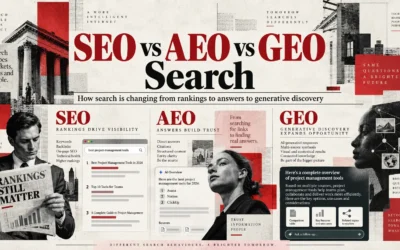
SEO vs AEO vs GEO Search: What the New Search Acronyms Actually Mean
Quick Answer: SEO helps people find your website through search engines like Google. AEO (answer engine optimization) helps your content become the direct answer inside featured snippets, voice search, and AI overviews. GEO (generative engine optimization) helps AI...

Claude vs ChatGPT vs Gemini vs Perplexity vs Grok
Quick Answer: If you only have time for one AI tool, pick ChatGPT for daily productivity, Claude for long-form writing that sounds human, and Perplexity when you need stats with sources. Gemini earns its keep inside the Google ecosystem, and Grok is best for real-time...

