
Key Takeaways:
- ChatGPT Atlas changes search forever. It blends browsing and AI-powered search into one seamless experience—no more switching between tabs or search engines.
- SEO strategies must evolve. Traditional keyword targeting gives way to intent-based, structured, and authoritative content that AI systems can easily interpret and reference.
- Authority is the new currency. Verified expertise, credible data, and topic completeness determine which brands AI assistants choose to cite.
- Metrics are shifting. Visibility will rely less on clicks and more on brand mentions, AI citations, and query relevance across semantic topics.
- Businesses must create content AI trusts. The winners in the Atlas era will be those who publish factual, in-depth, and user-first resources that feed AI accurate information.
OpenAI just dropped something big. ChatGPT Atlas isn’t just another browser. It’s a complete reimagining of how we interact with the web. And if you’re running a business that depends on digital visibility, you need to understand what this means for your online presence.
ChatGPT Search Engine Meets Browser: A Real Game Changer
Remember when everyone thought ChatGPT would kill Google? Well, OpenAI just took a massive step toward that reality. ChatGPT Atlas combines a web browser with AI-powered search capabilities, creating what they call a “true super assistant” for web browsing.
Here’s what makes this different: instead of typing keywords into a search bar and clicking through pages of results, you have a conversation. The ChatGPT search functionality understands context, remembers your preferences, and delivers timely answers without the traditional hassle of sifting through multiple websites.
This integration means that ChatGPT users no longer need to jump between a search engine and browser tabs to find and process information. The AI blends search and browsing into one seamless experience, allowing users to continue their research or tasks without interruption. For example, if you’re reading an article and want to know more about a specific topic mentioned, you can simply ask ChatGPT in the sidebar without leaving the page.
Moreover, the system leverages more data from your browsing history and previous chats (if you opt in) to offer personalized insights and recommendations. This makes the search experience smarter and more adaptive over time, helping users decide quickly on the best sources or actions to take.
Another significant benefit is the ability to dynamically redirect queries. If the AI detects that a specialized website or service would better answer your question, it can guide you there directly, saving time and effort.
The ChatGPT search engine in Atlas also handles complex, multi-step tasks. For instance, you might ask it to order ingredients for a recipe you found online or to summarize key points from multiple news articles related to a current event. This level of interactivity was previously required across multiple apps or through manual searches.
How ChatGPT Atlas Actually Works
The browser’s interface is intentionally familiar—resembling popular browsers like Chrome or Safari—to minimize user friction. However, its defining feature is a sophisticated sidebar that deeply integrates ChatGPT, providing real-time assistance for navigating, analyzing, and interacting with any webpage you visit.
For example, users can request complex transactions such as booking a train ticket directly through ChatGPT, which autonomously manages the process within the browsing context. When reviewing news articles, the AI efficiently distills essential information, delivering concise summaries that save valuable time. Investors can retrieve up-to-date stock quotes seamlessly without leaving their research page.
The power of this system lies in its natural language interface, which eliminates the need for specialized commands or technical knowledge. Users articulate their intent in everyday language, and the AI interprets and executes the request accurately.
At a technical level, the ChatGPT search engine leverages advanced natural language processing and contextual understanding to interpret user queries beyond keyword matching. It dynamically reformulates queries, interacts with multiple relevant web sources, and synthesizes information using a proprietary ranking algorithm that prioritizes credibility, recency, and relevance. This process enables the delivery of timely, contextually tailored answers to the user’s ongoing tasks.
Furthermore, ChatGPT Atlas maintains an optional, privacy-conscious memory system that stores browsing history and prior interactions. This allows the AI to personalize responses by recalling user preferences and previously accessed content, thereby enhancing the efficiency and coherence of multi-step workflows.
What This Means for Your Digital Strategy
The transition from conventional search engines to AI-driven browsing marks a profound transformation in digital information retrieval. This evolution compels businesses and content creators to fundamentally rethink their SEO and content strategies. Rather than relying on traditional keyword-based approaches, success now hinges on understanding user intent, leveraging context, and delivering comprehensive, authoritative content that meets the sophisticated demands of AI-powered search platforms like ChatGPT Atlas.
Content Structure for AI Consumption
AI browsers don’t read content the same way humans do. They parse information systematically, looking for clear signals and structured data. Your content needs to speak both languages.
This means breaking down complex information into digestible sections with clear headers. Service pages shouldn’t just list offerings. They should answer specific questions for each topic, including details such as processes, timelines, and expected outcomes.
Content creators need to move beyond keyword stuffing and develop comprehensive resource hubs. Think topic clusters where each piece of content connects logically to create a complete picture of the subject matter.
The Death of Traditional Keyword Research
Keywords still matter, but context matters more. ChatGPT search understands intent in ways traditional search engines never could. A query about “fixing a leak” knows whether you mean plumbing, cybersecurity, or customer retention based on your browsing context.
Smart businesses are already adapting. For example, home improvement companies are creating content that answers specific homeowner concerns, such as “how to quickly stop a dripping faucet,” rather than targeting generic terms like “plumbing repair near me.”
Technical SEO in an AI-First World
Schema markup becomes critical when AI is interpreting your content. Structured data helps Atlas understand not just what your content says, but what it means. Every FAQ, every service description, and every team member bio needs proper markup to ensure the AI can accurately categorize and present your information.
Page speed and Core Web Vitals matter even more now. AI browsers will prioritize sources that load quickly and deliver a smooth experience. If your handyman service website takes five seconds to load, Atlas will find a faster competitor to answer the user’s question. Optimizing images, minimizing scripts, and leveraging browser caching are all essential steps to improve performance and keep your site competitive in this new search landscape.
Measuring Success When Metrics Change
Traditional metrics like impressions and click-through rates become less meaningful when users never actually visit your site. Instead, focus on:
- Brand mentions in AI responses
- Content accuracy when cited by AI
- Query coverage (how many user questions your content answers)
- Semantic completeness of your topic coverage
Ecommerce businesses should track not just product page views but whether their product information appears in AI-generated shopping comparisons. Real estate agencies need to monitor whether their listings get pulled into market analysis responses.
Building Authority Atlas Can’t Ignore
AI browsers like ChatGPT Atlas are designed to filter noise and reward clarity. Their goal is to show the right result from the most trusted, data-backed, and expert-driven sources. That means the new race isn’t for backlinks or keyword density. It’s for authority.
Authority, in the Atlas era, will be defined by three things: evidence, expertise, and ecosystem.
1. Evidence: Publish original research and insights others can cite.
Atlas and other AI-powered search systems rely on factual grounding. When your brand becomes the source others quote, you’re no longer competing for visibility. You own the narrative. A roofing company that releases annual storm-damage data, a dental practice that compiles patient-education statistics, or a cybersecurity firm that tracks breach patterns. These are the kinds of sources AI systems elevate because they feed the model verified, useful information.
2. Expertise: Make your human authority visible.
In traditional SEO, faceless “admin” accounts could still rank. Not anymore. Atlas favors attributed, transparent expertise. Author bios, credentials, LinkedIn links, publication history, and even brand mentions across platforms all help signal real-world authority. Treat your writers, analysts, and subject-matter experts as front-facing voices because, to AI crawlers, expertise is measured by consistency and verification.
3. Ecosystem: Cover your topic like a knowledge hub
AI search doesn’t just retrieve isolated articles; it maps relationships between ideas. If you want to rank for “dental implants,” you need to cover the entire patient journey: consultation, procedure, recovery, maintenance, cost comparisons, and FAQs. The more complete your topical web, the more Atlas perceives you as a definitive resource.
Ultimately, the businesses that rise won’t be those trying to game AI systems. They’ll be the ones producing content that AI wants to reference. In other words, the internet is returning to its roots: valuable information written by people who actually know what they’re talking about.
Setting ChatGPT Atlas as Your Default Search Engine
Want to try Atlas yourself? You can set ChatGPT as your default search engine in the browser settings. Mac users can download it now at chatgpt.com/atlas, though you’ll need to be logged in to access full features.
The setup process is straightforward:
- Download Atlas from the official website
- Drag the application to your Applications folder
- Open settings and configure your search preferences
- Choose whether to import your browsing history from Chrome
Note that free users hit limits quickly. The full experience requires a ChatGPT Plus subscription, which many small businesses might find worth the investment for research and competitive analysis alone.
ChatGPT Atlas and the Hidden Cost of AI Clicks
When OpenAI introduced ChatGPT Atlas, it positioned the product as the next step in search evolution — a true super assistant that blends natural language queries with real-time web browsing. But as marketers explore this AI browser, a deeper concern is emerging. Atlas doesn’t just read the web; it interacts with it.
That interaction could quietly affect digital ad budgets and performance tracking.
How Atlas Clicks Like a Human
According to reports from software researchers, the new ChatGPT browser can behave like a human user during web browsing. It can open links, navigate pages, and even click on paid search results. Because Atlas runs on a Chrome-based framework, these actions are nearly indistinguishable from normal user behavior.
For ad networks and analytics tools, every AI-generated click looks legitimate. It triggers spend, contributes to traffic, and appears as a session from a real user. But since AI browsing sessions do not carry purchase intent, those clicks can distort metrics, waste ad spend, and complicate ROI measurement.
Why Detection Is Difficult
Traditional fraud detection systems were trained to identify bots that move in predictable patterns or generate repetitive clicks. ChatGPT Atlas represents a more advanced type of automation. It reads, scrolls, and navigates websites like a human would. This makes it difficult for platforms to distinguish real visitors from AI agents.
This creates a potential gap in how Google Search, ad networks, and browser analytics interpret activity. For marketers, that means sudden traffic spikes may not always translate into genuine engagement or conversions.
How Businesses Can Respond
To safeguard your search engine marketing efforts, monitor your analytics closely for unusual trends. Key signs include:
- Traffic surges without corresponding conversions
- Perfect bounce rates (exactly 0% or 100%)
- Uniform session durations or identical engagement metrics
- Clicks from repeating IP ranges at consistent intervals
Implement click-fraud protection tools that measure engagement quality, not just volume. Where possible, refine your ad targeting to exclude automated browsing environments or unverified user agents. Reporting suspicious activity to ad platforms also helps improve detection systems that are still adapting to AI-driven browsing.
Rethinking the Future of Search
The shift from Google Search to ChatGPT search represents more than a technical change. It’s a redefinition of how users access information. ChatGPT users can now search directly through conversation, without typing into a browser URL bar or reviewing long lists of links.
That creates a new kind of competition. Brands are competing to be part of the relevant web sources that AI systems reference when generating timely answers.
The takeaway is simple. The businesses that succeed in this new search experience will not be those that try to exploit the system. They’ll be the ones publishing helpful, verified, data-backed content that AI browsers trust.
We’re entering an era where AI assistants decide which websites deserve visibility. The best strategy is not to chase clicks but to create value that the AI recognizes as worth returning to.
Your content goes here. Edit or remove this text inline or in the module Content settings. You can also style every aspect of this content in the module Design settings and even apply custom CSS to this text in the module Advanced settings.
World Class SEO Services,
Filipino Affordability.
Book a Consultation here.
FAQS about ChatGPT Search Engine
Is ChatGPT Atlas free?
Atlas is free to download for Mac users, but you’ll hit usage limits quickly without a paid subscription. Free users can browse normally, but get restricted ChatGPT search features after just a few queries. Full functionality requires ChatGPT Plus ($25/month) or higher tiers. For businesses conducting regular research or competitive analysis, the subscription cost often pays for itself by saving time compared to traditional search methods.
What's the difference between ChatGPT Search and Google?
While Google presents a list of links for you to explore, ChatGPT search synthesizes information from multiple relevant web sources and delivers a complete answer. Think of Google as a librarian who shows you which books to read. ChatGPT Atlas is more like a research assistant who reads everything and gives you a summary. The trade-off? You lose some control over source selection but gain massive time savings.
Can I use ChatGPT Atlas as my default browser?
Yes, Atlas functions as a full web browser that you can set as your system default. It handles all standard browsing tasks including bookmarks, passwords, downloads, and multiple tabs. The browser URL bar works just like Chrome’s since Atlas is built on Chromium. However, Windows and mobile versions aren’t available yet, limiting its viability as a primary browser for many businesses.
Is ChatGPT Atlas safe for business use?
Atlas raises legitimate privacy concerns for businesses handling sensitive data. Every search and click feeds into OpenAI’s training data, potentially exposing competitive intelligence or client information. Healthcare providers and law firms should be especially cautious. For general research and content creation, it’s fine. For proprietary business data, financial records, or client communications, use traditional browsers in private or incognito mode.
How does Atlas affect my website's SEO?
Atlas fundamentally changes how users discover content, but good SEO practices still matter, perhaps more than ever. The AI needs well-structured, authoritative content to provide accurate answers. Schema markup, clear headings, and comprehensive topic coverage become critical. Focus on answering specific questions rather than targeting keywords. Businesses with strong, educational content will see their information cited in AI responses, even if direct website visits decrease.
Related SEO Posts
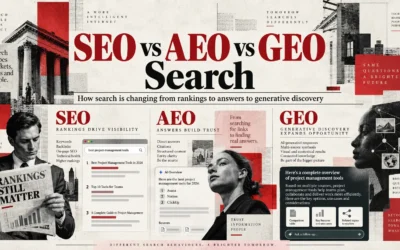
SEO vs AEO vs GEO Search: What the New Search Acronyms Actually Mean
Quick Answer: SEO helps people find your website through search engines like Google. AEO (answer engine optimization) helps your content become the direct answer inside featured snippets, voice search, and AI overviews. GEO (generative engine optimization) helps AI...
Claude vs ChatGPT vs Gemini vs Perplexity vs Grok
Quick Answer: If you only have time for one AI tool, pick ChatGPT for daily productivity, Claude for long-form writing that sounds human, and Perplexity when you need stats with sources. Gemini earns its keep inside the Google ecosystem, and Grok is best for real-time...

