
Quick Answer: The best AI visibility tools right now are Profound for enterprise teams, Peec AI and AthenaHQ for mid-size brands and agencies, and Otterly.AI for smaller brands and freelancers. Each tracks how your brand shows up across ChatGPT, Perplexity, Google AI Mode, and other AI engines.
Key Takeaways
- AI visibility tracks how often your brand appears in answers from ChatGPT, Perplexity, Google AI Mode, and other AI engines
- Traditional SEO tools were not built to measure this kind of brand visibility
- The right tool depends on whether you are a small brand, a marketing agency, or an enterprise team
- Free options exist for testing the waters before paying for a full AI visibility platform
- AI search monitoring closes visibility gaps before competitors do, but tools alone do not fix your standing
Search has changed faster in the last two years than it did in the previous decade. People are no longer typing keywords and clicking through ten blue links. They are asking ChatGPT, Perplexity, and Google AI Mode full questions and getting full answers back, often without ever visiting a website.
This shift created a new question for every brand. If AI platforms are now the gatekeepers between you and your customers, how do you know if your brand is even part of the conversation?
That is what AI visibility tools are built to answer. They track how often your brand appears in AI-generated answers across major AI models, how it stacks up against competitors, and what sentiment those mentions carry. The category is young. The tools vary wildly in quality. The marketing around them is loud.
Search visibility is no longer only about Google rankings. Online visibility now stretches across ChatGPT, Perplexity, Google AI, Gemini, Claude, and Meta AI. Below is an honest breakdown of the best AI visibility tools available right now, what each one actually does well, and how to pick the one that fits your situation.
In this Guide
How AI Visibility Tools Work
AI visibility tools feed a list of prompts to different AI search engines, then log the answers. They check whether your brand was mentioned, how it was described, who else was mentioned alongside it, and whether the tone of the mention was positive, neutral, or negative.
Most platforms run these checks on a schedule. Some refresh daily. Others refresh weekly. The visibility data is stitched together into dashboards that show visibility trends, brand sentiment analysis, competitor benchmarking, and AI rankings across multiple engines.
What separates a strong AI visibility tool from a basic one comes down to a few things. Engine coverage matters most. A tool that only checks ChatGPT misses a huge chunk of your real audience. Refresh frequency is the next factor because AI responses shift constantly. Sentiment analysis reveals the tone behind every mention. This means a brand can be visible and still have a perception problem.
The best platforms also turn raw AI mentions into actionable insights. They let you explore the conversations behind the data and spot visibility gaps before competitors close them. That is where brand performance tracking moves from a vanity metric into something you can actually use.
Top AI Visibility Tools at a Glance
Here is a side-by-side look at the tools I recommend most often. Pricing changes often in this category, so treat these as starting points rather than fixed numbers.
| Tool | Best For | AI Engines Tracked | Starting Price | Free Option |
| Profound | Enterprise teams | ChatGPT, Perplexity, Google AI, Gemini, Claude | Custom (enterprise) | No |
| Peec AI | Mid-size brands and agencthe ies | All major AI engines | ~$89/mo | Free trial |
| AthenaHQ | Marketing agencies | All major AI engines | ~$99/mo | Free trial |
| Otterly.AI | Small brands and freelancers | ChatGPT, Perplexity, Google AI | Free / from $29/mo | Yes (free tier) |
| Scrunch AI | Enterprise and large brands | All major AI engines | Custom | No |
| Semrush AI Toolkit | Existing Semrush users | ChatGPT, Perplexity, Google AI | Bundled with the Semrush plan | With trial |
| Ahrefs Brand Radar | Existing Ahrefs users | ChatGPT, Perplexity, Gemini | Bundled with the Ahrefs plan | With trial |
| HubSpot AEO Grader | Beginners | ChatGPT | Free | Yes |
The Best AI Visibility Tools Reviewed
Each tool below earns its spot for a different reason. Some are built for enterprise teams with serious budgets. Others fit small brands testing AI visibility for the first time. Below is what each one does well, who it suits, what stands out, and what it costs.
Profound
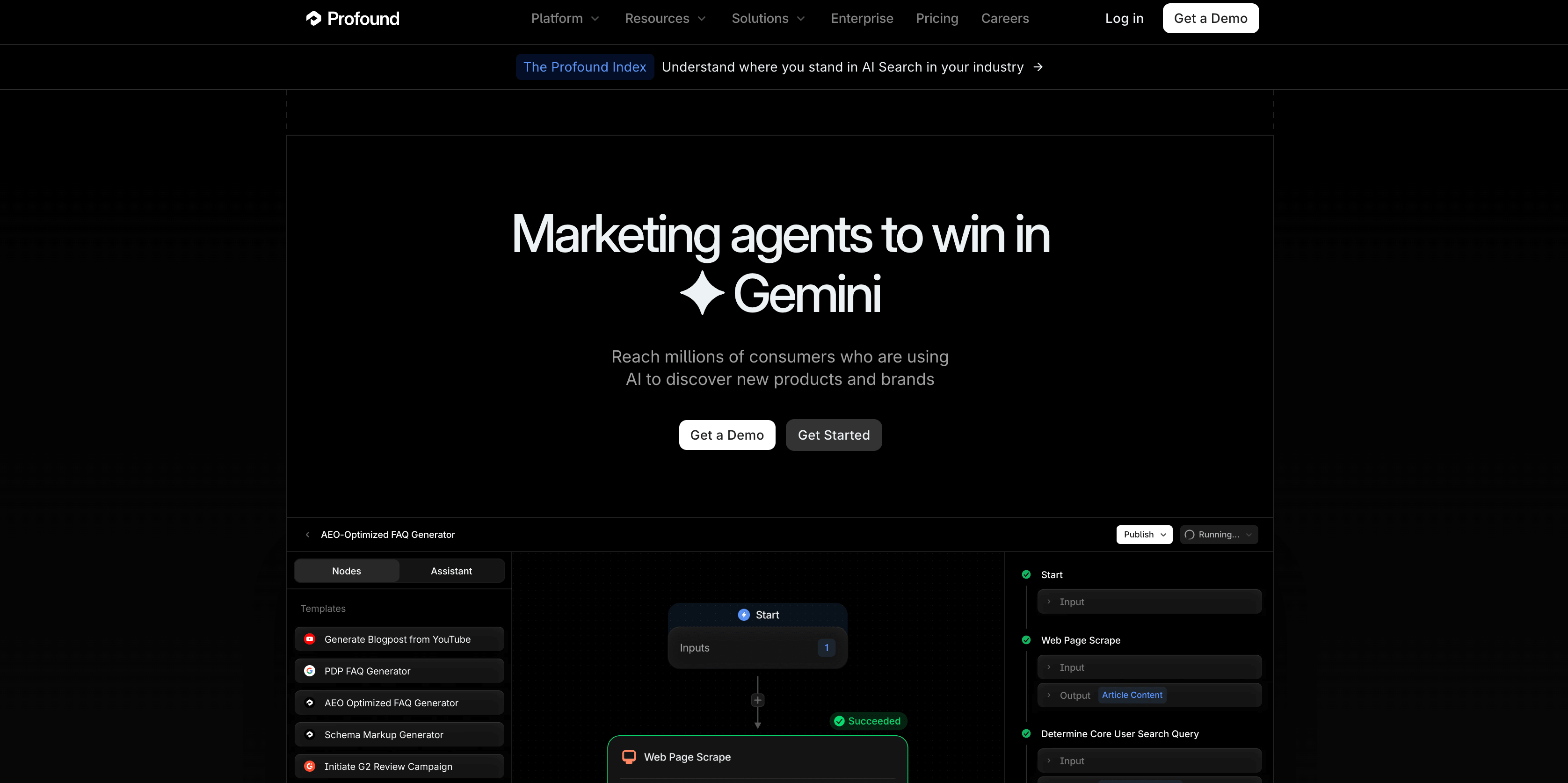
Profound is the platform most enterprise teams choose once they outgrow lighter tools. It tracks brand mentions across ChatGPT, Perplexity, Google AI Overviews, Gemini, and Claude in one dashboard.
Who it’s for: Enterprise marketing teams that need deep AI search performance data and detailed brand positioning insights.
Key features:
- Conversation Explorer for reading the actual AI-generated answers that mention your brand
- Answer Engine Insights that map which prompts trigger your brand and which trigger competitors
- Strong competitor visibility tracking alongside your own
- Multi-engine coverage across ChatGPT, Perplexity, Google AI, Gemini, and Claude
- Dedicated account rep included for larger campaigns
Pricing: Custom enterprise pricing. No free tier.
Peec AI
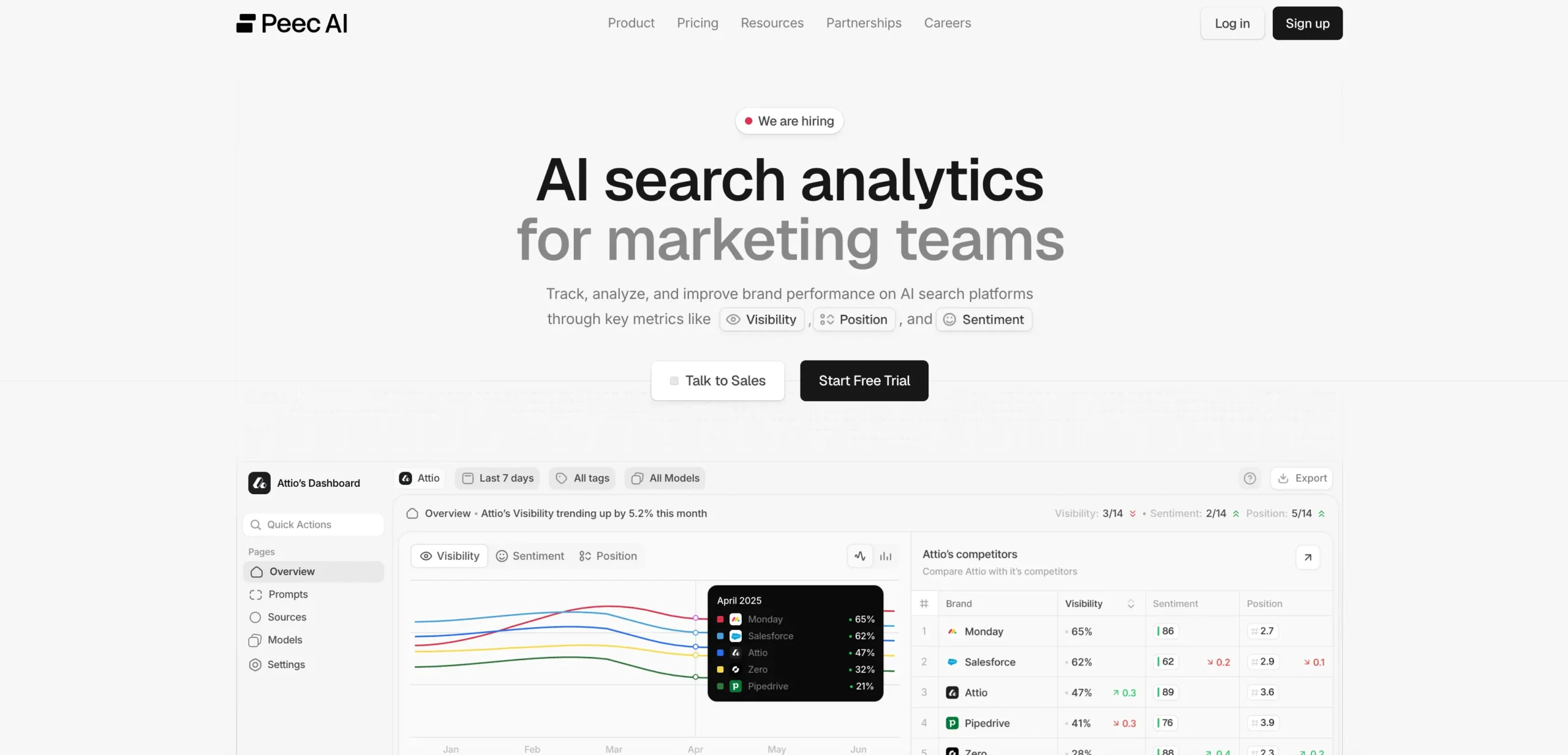
Peec AI is a Berlin-based platform that has built a strong reputation among agencies and mid-size brands. It covers all the major AI engines and puts a heavy weight on competitive benchmarking.
Who it’s for: Agencies and growing brands that want strong competitor benchmarking without enterprise pricing.
Key features:
- Clean interface with intuitive prompt tracking
- Strong tools for tracking competitors over time
- Easy reporting for client or leadership presentations
- Coverage across all major AI engines
Pricing: Starts around $89/month. Free trial available.
AthenaHQ
AthenaHQ was built with marketing agencies in mind from day one. The platform supports multiple brands within a single workspace, making it easier to manage client accounts without juggling separate search tools.
Who it’s for: Marketing agencies running AI visibility tracking for multiple clients at once.
Key features:
- Multi-brand workspace for managing several client accounts
- Solid sentiment tracking across major AI engines
- Reporting designed for agency client presentations
- Newer platform with feature depth is still catching up to Profound and Peec AI
Pricing: Starts around $99/month and scales with the number of brands tracked. Free trial available.
Otterly.AI
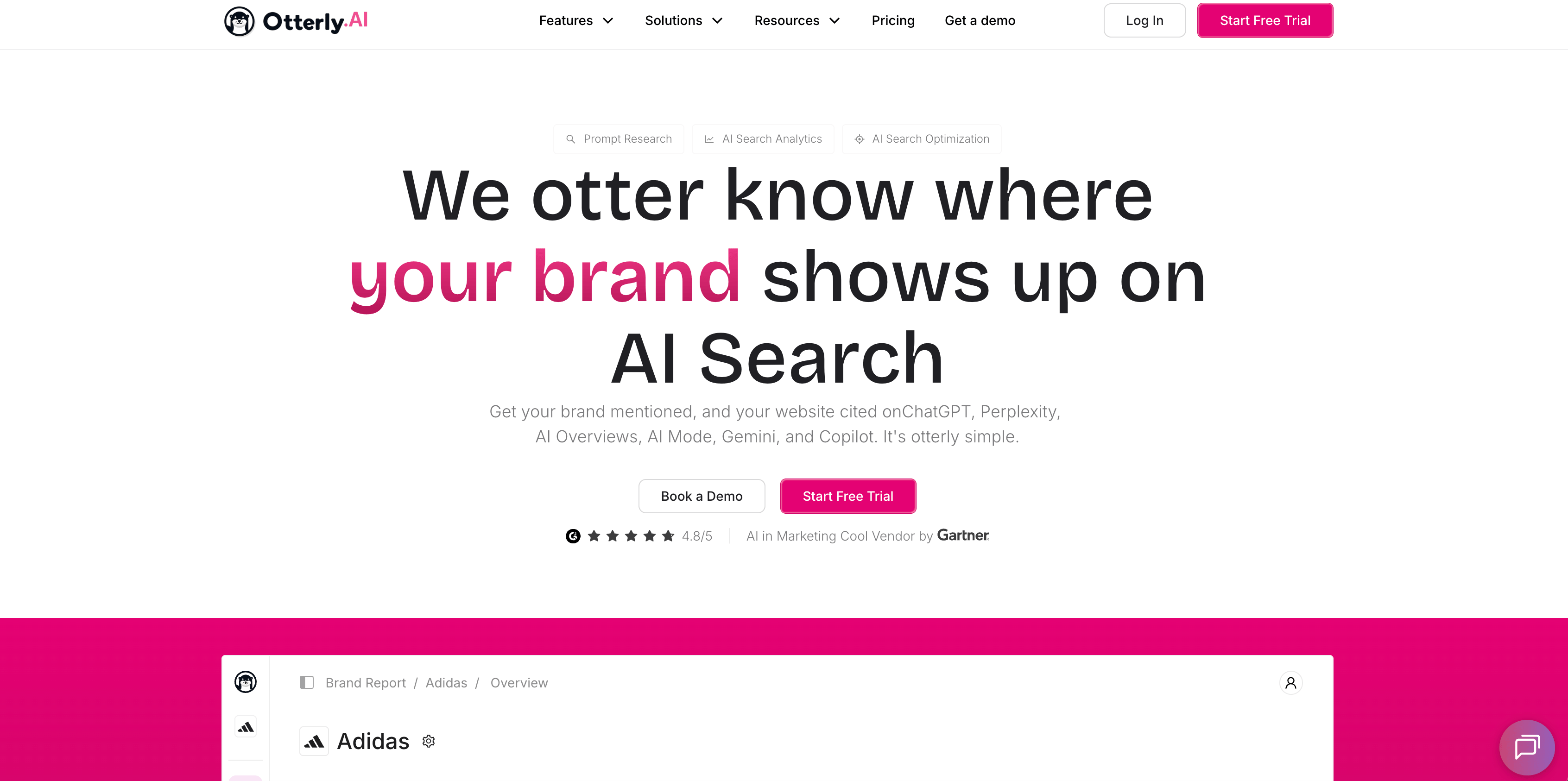
Otterly.AI is the tool I point small brands and freelancers toward when they want to test the waters without paying enterprise money. It has a free tier that gives you basic prompt tracking across ChatGPT, Perplexity, and Google AI.
Who it’s for: Small brands, freelancers, and anyone testing AI brand visibility for the first time.
Key features:
- Free tier with basic prompt tracking across major AI engines
- Paid plans add deeper tracking and competitor monitoring
- Short learning curve
- Fast read on your brand’s presence in AI responses
Pricing: Free tier available. Paid plans start at $29/month.
Scrunch AI
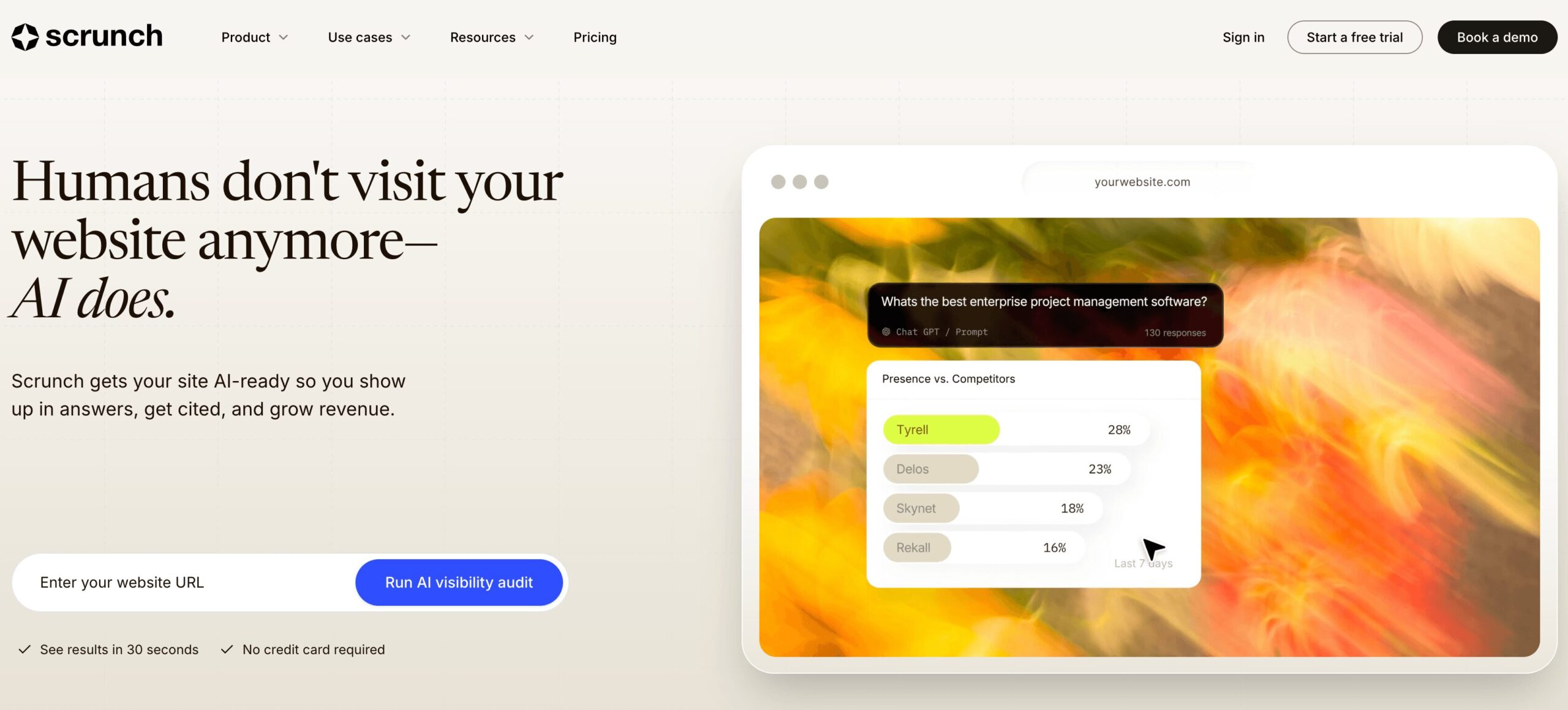
Scrunch AI is built for large brands that care deeply about perception. The platform puts sentiment analysis front and center. You see how AI talks about your brand, not just whether it talks about you.
Who it’s for: Enterprise brand teams focused on brand perception and reputation inside AI-generated answers.
Key features:
- Deep brand sentiment analysis as the headline feature
- Executive-ready dashboards for brand teams
- Brand positioning tracking over time
- Coverage across multiple AI engines
Pricing: Custom enterprise pricing that skews high. No free tier.
Semrush AI Toolkit
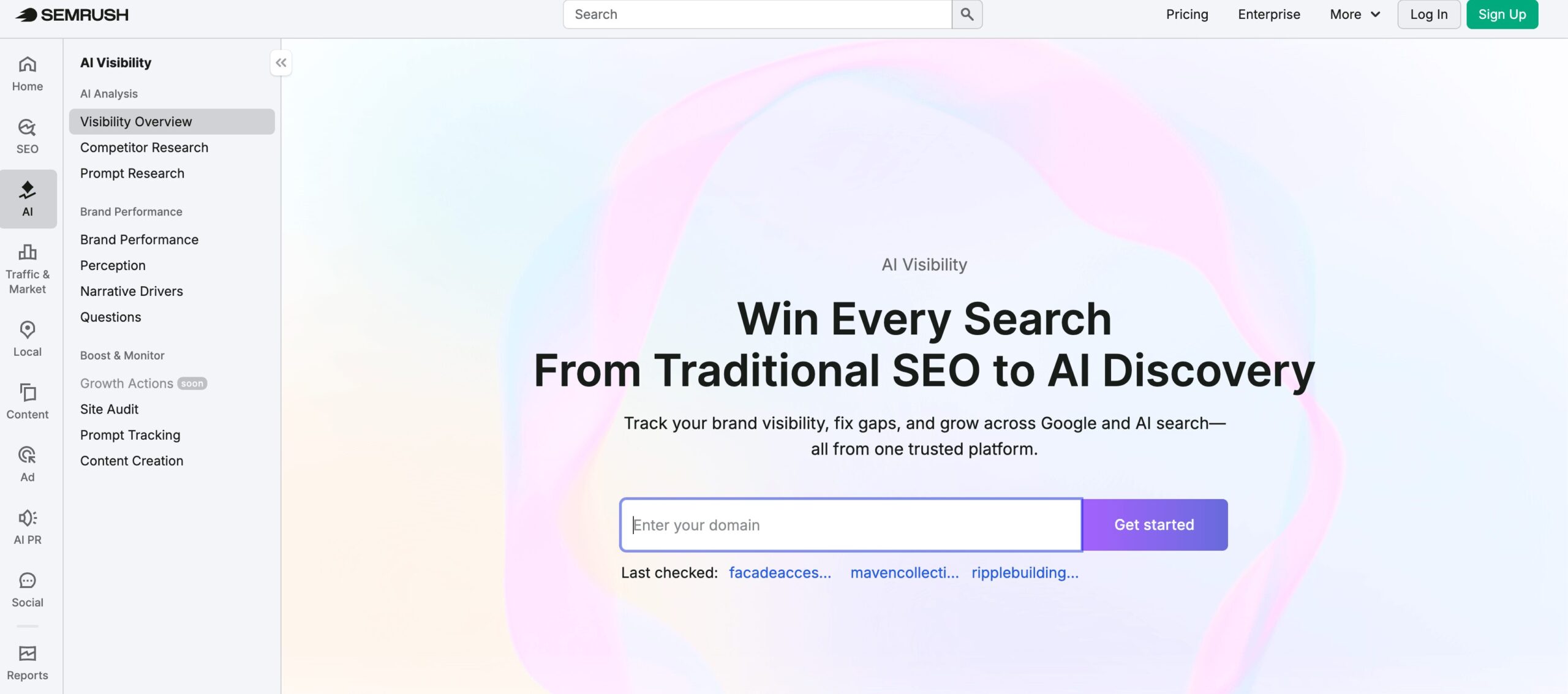
If you already use Semrush, the AI Toolkit is a natural starting point. It folds AI visibility tracking and search monitoring into the same dashboard you already use for keyword research and traditional SEO.
Who it’s for: Existing Semrush users who want AI visibility data without leaving their main SEO platform.
Key features:
- Brand mention tracking in ChatGPT, Perplexity, and Google AI Mode
- AI search monitoring inside your existing Semrush workflow
- Snapshot view rather than the deep data of dedicated platforms
- Engine coverage narrower than standalone tools
Pricing: Bundled with your Semrush subscription. Access depends on your plan level. Available with the Semrush free trial.
Ahrefs Brand Radar
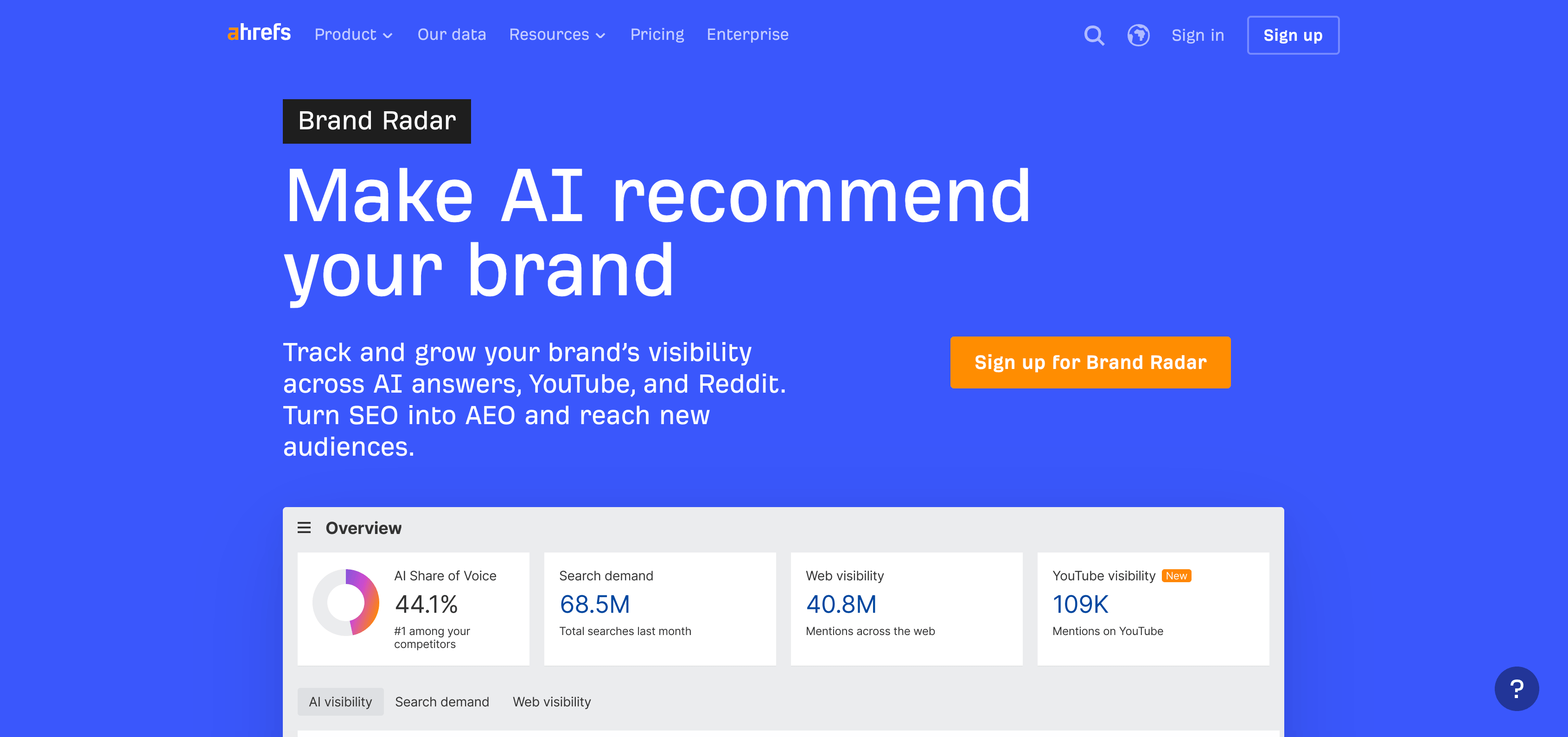
Ahrefs Brand Radar tracks brand mentions across the web and inside AI engines. It is the kind of feature you appreciate if Ahrefs is already part of your workflow.
Who it’s for: Existing Ahrefs users who want one platform for both SEO and AI brand visibility.
Key features:
- Strong mention tracking across the web and AI engines
- Tied to the competitive research data Ahrefs has built for years
- Visibility into who is mentioning your brand and how you compare to competitors
- Bundled into the main Ahrefs subscription
Pricing: Bundled with your Ahrefs subscription. Access depends on your plan tier. Free trial available with an Ahrefs account.
HubSpot AEO Grader
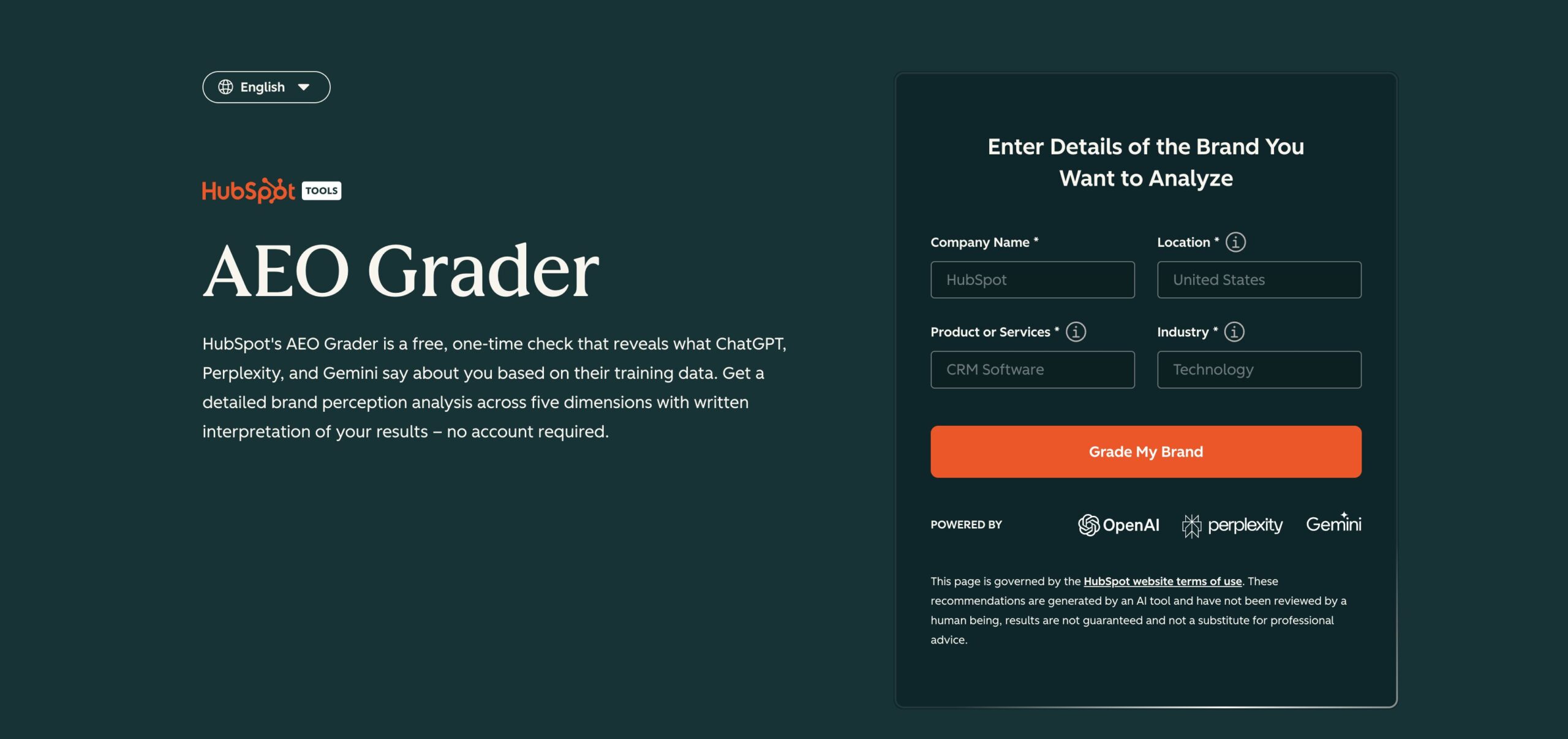
HubSpot’s AEO Grader (formerly the AI Search Grader) is the easiest entry point on this list. It is free. It takes about five minutes. It gives you a quick read on how visible your brand is in ChatGPT.
Who it’s for: Anyone who wants a quick, free AI visibility checker before paying for a full platform.
Key features:
- Free to use with no signup friction
- Quick five minute read on ChatGPT visibility
- Score plus example answers
- Limited engine coverage and no scheduled data refresh
Pricing: Completely free.
How to Choose the Right AI Visibility Tool
Picking the right tool comes down to matching the platform to your situation. A few questions help cut through the noise.
- Match the tool to your size. Solo brands and small businesses rarely need enterprise features. Otterly.AI or HubSpot’s free grader is usually enough to start. Mid-size brands and agencies get more value from platforms like Peec AI or AthenaHQ. Enterprise teams with larger budgets and more extensive reporting needs tend to lean toward Profound or Scrunch AI.
- Check engine coverage. Some tools only track ChatGPT. Others cover the full spectrum of AI-powered search, including Perplexity, Google AI, Gemini, Claude, and Meta AI. If your audience is spread across multiple AI assistants, narrow coverage will give you a blind spot. Multi-engine coverage is worth paying for.
- Look at the data, not the dashboard. Pretty dashboards sell tools. What you actually need is depth. Can you see the conversations behind the mentions? Does the platform track sentiment along with frequency? Can you compare against the specific competitors you care about? Those features separate a tool you will use from one that becomes a forgotten browser tab.
- Consider what already lives in your stack. If you already pay for Semrush or Ahrefs, their AI features may cover enough ground for you to skip a dedicated platform. Adding another subscription only makes sense if your existing tools fall short of what you need to track.
Where AI Visibility Tools Fall Short
Here is the part most articles skip. Tools measure visibility. They do not create it.
Every platform on this list gives you data. It tells you how often your brand shows up, what AI says about it, and how you compare to competitors. That is incredibly valuable. It is also the starting line, not the finish line.
If a tool shows that your brand is invisible in AI responses, no dashboard will fix that. The work that moves the needle happens off the platform. You need content structured for AI systems to read and cite. You need real authority signals, including brand mentions on credible third-party sites. You need a strategy for how your brand answers the questions your customers are asking.
This is the gap I see most often when small brands and agencies bring me in. They have invested in a tool. They have the data. They have no idea what to do next. The data only gets useful when paired with a plan to act on it. That is the work behind my generative engine optimization services and LLM SEO services, which turn what a tool reveals into actual visibility gains.
If you want to dig deeper into the strategy side, my guide on how to rank in AI Overviews covers the playbook in more detail.
Closing Thoughts
AI search is moving fast and the tools to track it are improving every quarter. The right platform makes a real difference, but only when paired with a real plan.
Start by picking a tool that matches your size. Use it long enough to see patterns. Then act on what it shows you. If you want a partner who can help you turn AI visibility data into actual rankings and brand mentions, let’s talk. The goal is the same whether the search engine is Google or ChatGPT. You want your brand in the answer.
Let’s Talk AI Visibility
FAQs on AI Brand Visibility Tool
What are the best AI search visibility tools?
The best tools right now are Profound for enterprise teams, Peec AI and AthenaHQ for mid size brands and agencies, and Otterly.AI or HubSpot’s free grader for smaller brands. The right pick depends on budget, engine coverage, and team size.
How do AI visibility tools compare in cost?
Free tools like HubSpot AI Search Grader cost nothing but offer limited depth. Mid-tier platforms like Otterly.AI and Peec AI start between thirty and one hundred dollars a month. Enterprise tools like Profound and Scrunch AI run into thousands of dollars a month, with custom pricing based on scope.
Can I track ChatGPT and Google AI Mode in the same platform?
Yes. Most of the serious AI visibility tools cover both, along with Perplexity, Gemini, and Claude. Coverage varies between platforms, so check the engine list before subscribing. Multi-engine coverage is one of the most important features to look for.
Do I still need traditional SEO tools if I have an AI visibility tool?
Yes. Traditional search still drives the majority of online discovery, and Google’s classic results are still where most journeys start. AI visibility tools work alongside traditional SEO platforms, not in place of them. Both layers feed each other.
Do you recommend a specific AI visibility tool for small businesses?
For most small businesses, Otterly.AI is a good place to start because of its free tier and approachable pricing. If you already use Semrush or Ahrefs, their built-in AI features are usually enough to get going without adding another subscription.
Can you help me act on what an AI visibility tool reveals?
Yes. Most of my clients come to me after running into the same wall. They have the data but no clear plan. My generative engine optimization and LLM SEO services are built to bridge that gap. Send me a message and we can talk through your situation.
Related SEO Posts
SEO vs AEO vs GEO Search: What the New Search Acronyms Actually Mean
Quick Answer: SEO helps people find your website through search engines like Google. AEO (answer engine optimization) helps your content become the direct answer inside featured snippets, voice search, and AI overviews. GEO (generative engine optimization) helps AI...
Claude vs ChatGPT vs Gemini vs Perplexity vs Grok
Quick Answer: If you only have time for one AI tool, pick ChatGPT for daily productivity, Claude for long-form writing that sounds human, and Perplexity when you need stats with sources. Gemini earns its keep inside the Google ecosystem, and Grok is best for real-time...

