Case Study:
From 8 Thin Websites to the Most-Cited Facade Access Brand in AI Search
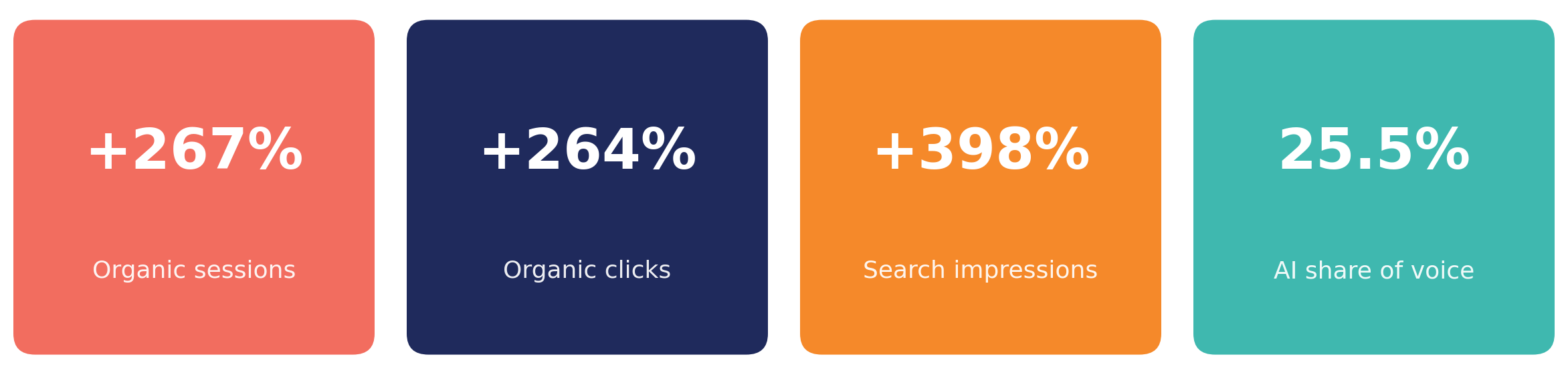
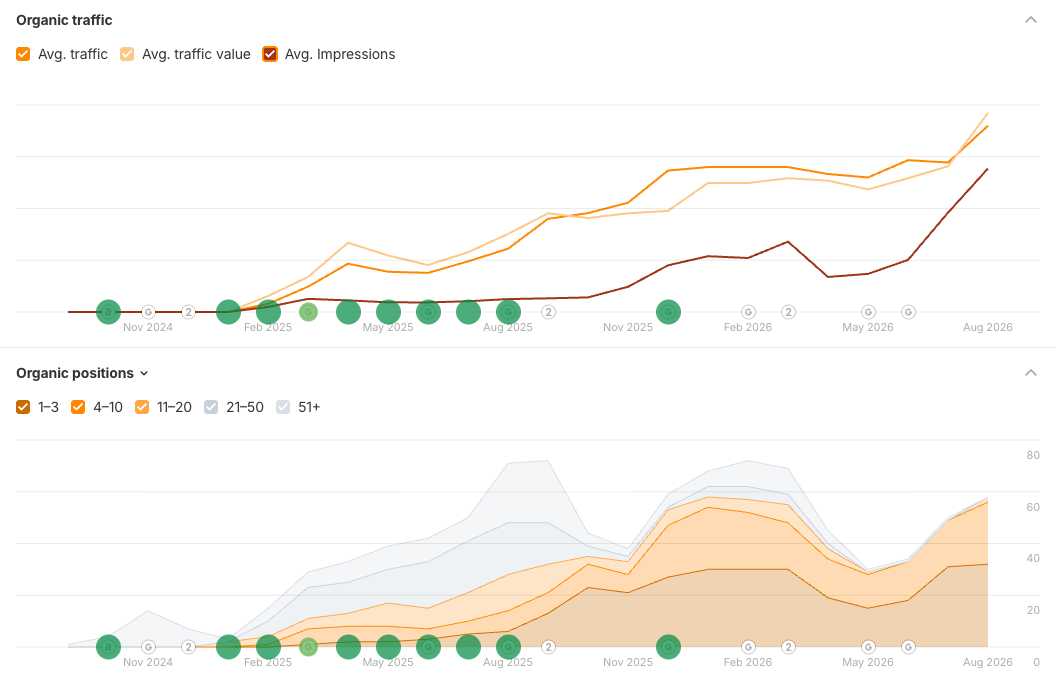
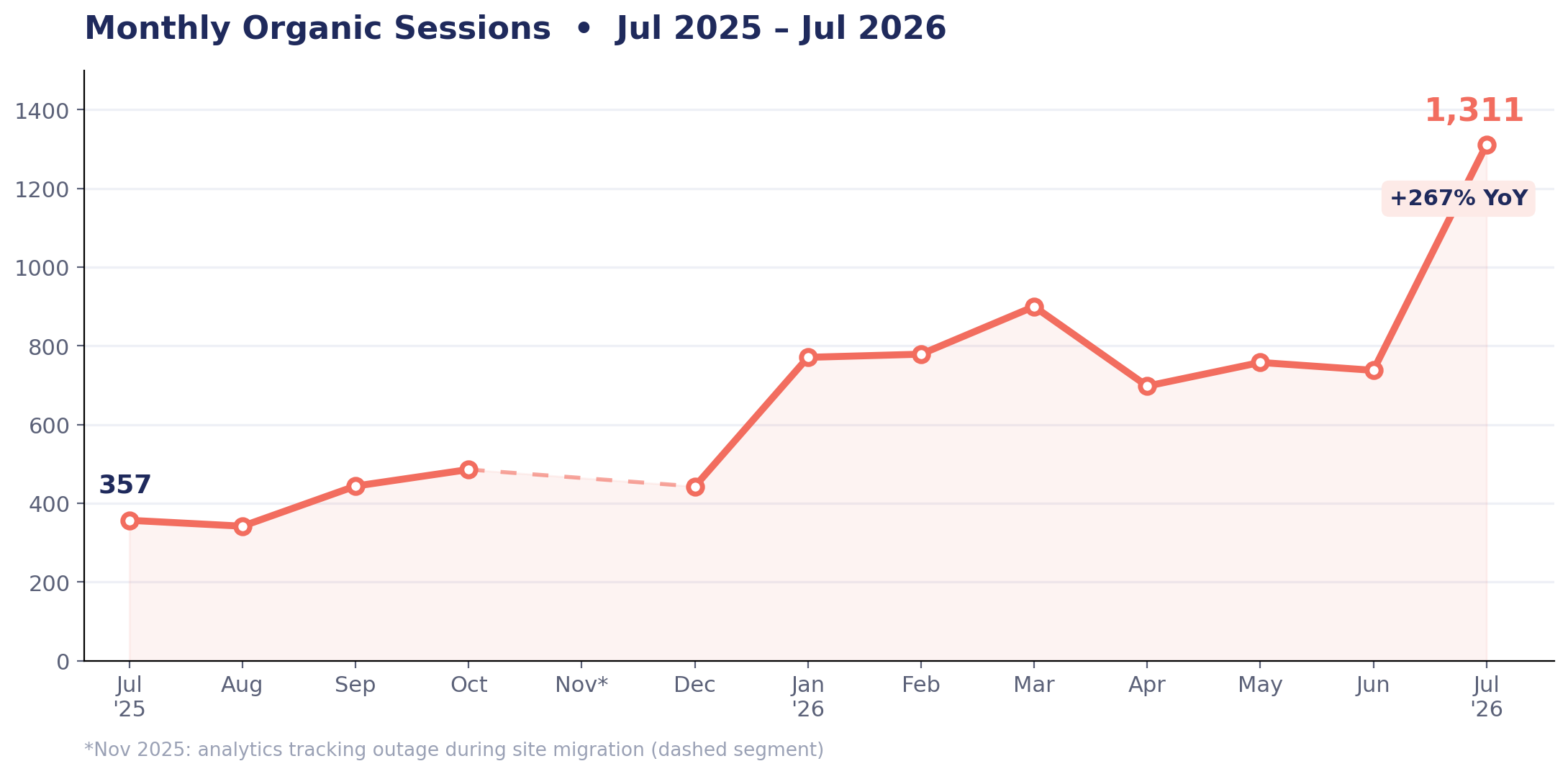
We started in July 2025 with 357 organic sessions and 237 clicks from Google. Twelve months later, organic sessions climbed to 1,311 per month (+267%) and clicks reached 863 (+264%). Search impressions grew nearly fivefold, from 14.6K to 72.6K. The brand now holds 25.5% AI share of voice in its category, with the nearest competitor at just 3.3%. And this happened while rebuilding 8 websites from the ground up, launching new regional sites from scratch, and navigating two major Google core updates.
About the Corporation
This company specializes in facade access systems for high-rise buildings. Their products and services include building maintenance units (BMUs), monorail systems, davit systems, and fall protection solutions. They serve architects, developers, and facility managers across multiple regions, with dedicated websites for North America, EMEAI, France, Spain, Germany, the Netherlands, and several APAC markets.
Their offerings are highly technical, and their buyer journey is long. The SEO challenge was to build visibility across multiple languages, regions, and search intents while competing with well-established global brands that had years of domain authority.
The Starting Point
When I took over the campaign, the company had 8 websites: 1 global and 7 regional. On paper, that sounds like a mature digital footprint. In practice, every regional site was a copy-paste of the global site. Same content, duplicated across every market.
The gaps were everywhere:
- No product pages existed. The company sells BMUs, monorails, davits, and powered platforms, yet none of its core equipment had a dedicated page anywhere on any site.
- Pages averaged under 500 words with no heading structure, no meta tags, and no internal links.
- Fewer than 5 blog posts existed, each under 300 words, AI-generated filler, and duplicated across all regions.
- The backlink profile was thin compared to competitors, and AI visibility was effectively zero.
The site had decent brand traffic and nothing else. Google had almost nothing to rank, and AI platforms had almost nothing to cite.
The Challenge
The client wanted all websites relaunched and revamped in 3 to 6 months. Technical issues extended the full rebuild until February 2026, which meant SEO had to run alongside an active migration rather than after it. Every optimization had to survive a moving target: URLs changing, templates shifting, and pages going live in waves.
On top of that, this is a corporation. Content approval runs through multiple layers and takes time. And midway through the campaign, Google rolled out a core algorithm update (March 2026) followed by ranking fluctuations in April. Every gain had to survive both the migration and the algorithm.
Start Your Success Story. Hire an SEO Expert Today!
Struggling with online visibility? See how we revolutionized a leading Adelaide firm’s digital reach through innovative SEO strategies. Their journey from obscurity to market dominance reflects our expertise. Don’t stay hidden; let ‘It’s a Writer’s World’ craft your success story. Hire us for standout SEO and content solutions!
Phase 1: Build the foundation (Jul 2025 – Feb 2026)
The first priority was giving Google and AI platforms something to rank and cite. I planned and populated content for pages across the Global and regional websites, covering services, solutions, and, critically, new product pages so each major piece of equipment finally got its own spotlight: BMUs, monorails, davit systems, powered platforms, and more. Each page was written against target keywords with proper heading structure, meta tags, and internal links, none of which existed before.
The rebuild dragged past the original deadline into February 2026, and the migration even knocked out analytics tracking for most of November 2025. The content foundation went in anyway, page by page, as sections of the new sites came online.
Phase 2: Optimize around the red tape (post-launch)
Because corporate content approval is slow, I made a deliberate process decision: get management-approved content live first, then run SurferSEO optimization passes afterward. This avoided holding launches hostage to revision cycles.
The revised content structure was also built GEO-first, because the campaign goal was always dual: organic rankings and AI visibility. That meant tables of contents on blogs, FAQ sections on key pages, and schema markup rolled out across the sites (still ongoing). The structure was designed for machines to parse and quote, not just for humans to skim.
Phase 3: Compound the growth
With the foundation live, the work shifted to expansion:
- TASM content-gap reporting and a content workbook to plan the blog pipeline against what competitors ranked for and we didn’t.
- Internal linking and URL refinements to distribute authority to priority pages.
- Off-page work and citation building across industry directories and platforms in each target market.
- Competitive analysis to arm the marketing team’s LinkedIn and Reddit promotion.
But the honest answer on what earned the AI citations: the blog articles. Fresh, keyword-optimized, genuinely useful technical content is what AI engines picked up and quoted, over and over.
The Organic Results? From Invisible to Most-Cited Brand in AI Search
| Metric | Jul 2025 | Jul 2026 | Change |
| Organic sessions | 357 | 1,311 | +267% |
| Organic users | 223 | 814 | +265% |
| Organic clicks (GSC) | 237 | 863 | +264% |
| Search impressions | 14,578 | 72,607 | +398% |
| Queries earning impressions | 536 | 1,036 | +93% |
| Pages earning clicks | 26 | 178 | +585% |
| Tracked keywords ranking | 92 | 207 | +125% |
| Keywords in top 10 | 29 | 48 | +66% |
Growth accelerated as the rebuilt sites matured. The final two months were the strongest of the entire campaign: June 2026 hit 1,953 total organic-driven sessions on the way to July’s record, and July 2026 posted the highest organic traffic in the site’s history.
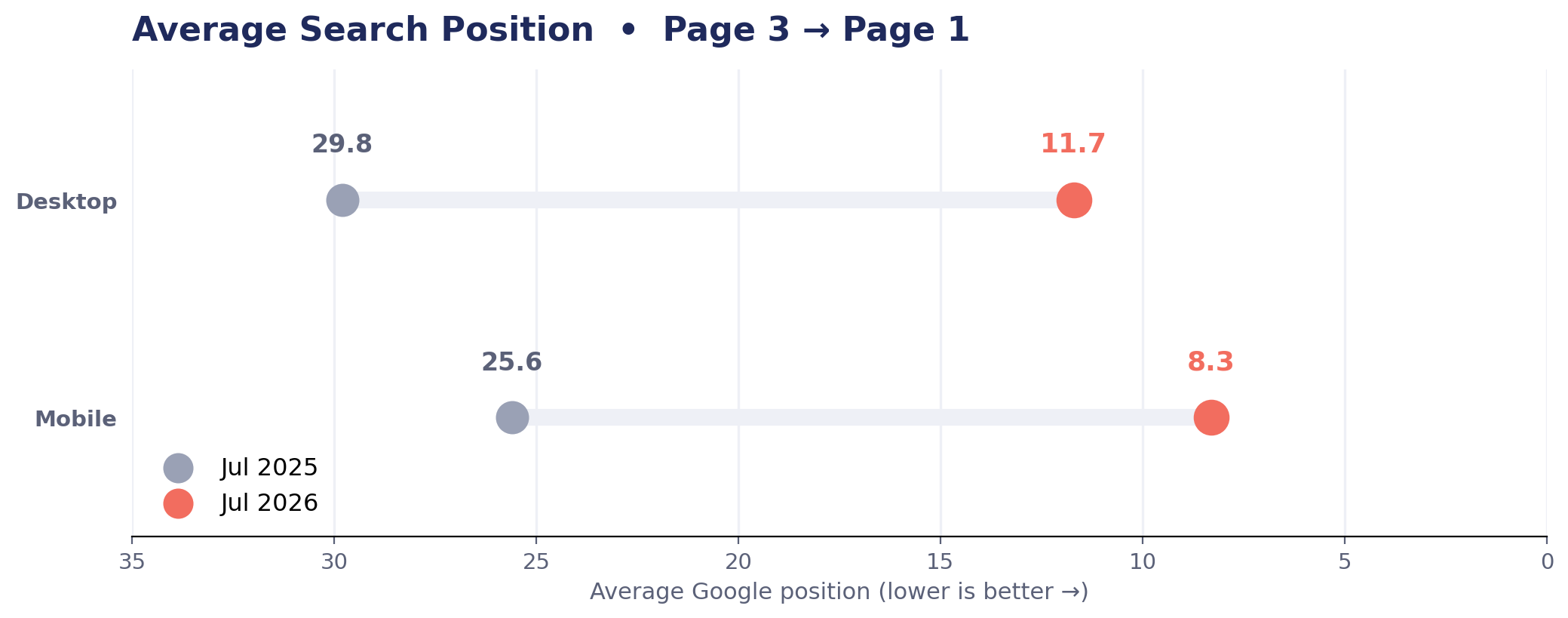
Average search position across the site improved from 29.8 to 11.7 on desktop and from 25.6 to 8.3 on mobile. The site didn’t just get more visible. It moved from page three to page one.
Win #1: Product pages that didn’t exist a year ago now lead the site
At kickoff, the company had zero product pages. In July 2026, the NAM monorails product page was the second most-clicked page on the entire domain, earning 31 clicks and 1,756 impressions in a single month. The global monorails page added another 18 clicks and 2,107 impressions. Pages that were built from nothing during this campaign now outperform everything except the homepage.
Win #2: The blog became the AI citation engine
The roof guardrail installation article, written and published during this campaign, pulled 5,572 impressions in July 2026 and continues to appear across AI platforms. The davit systems article added 2,816 impressions and 28 clicks. These aren’t legacy assets riding old authority. Every one of them started at zero during this campaign.
The GEO Results: #1 in the Category Across AI Search
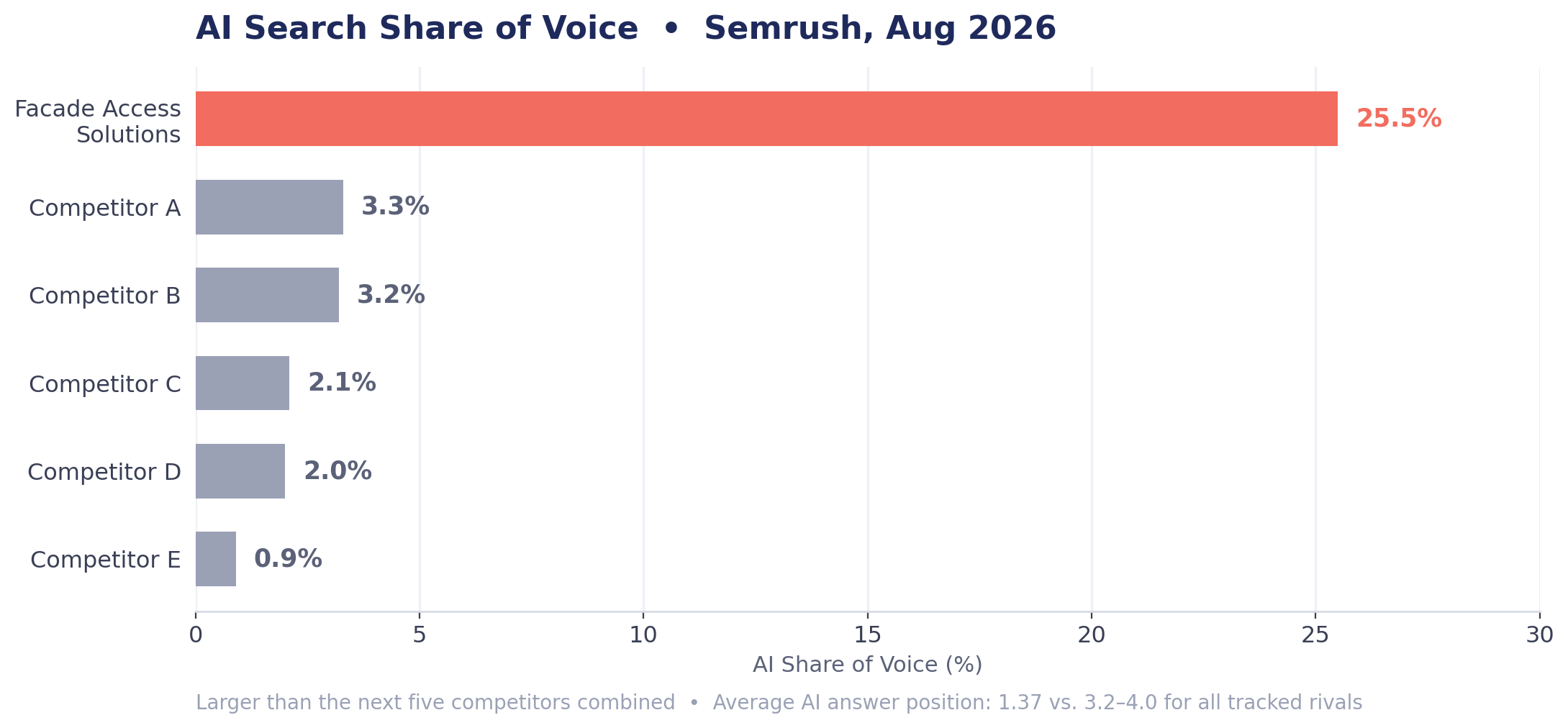
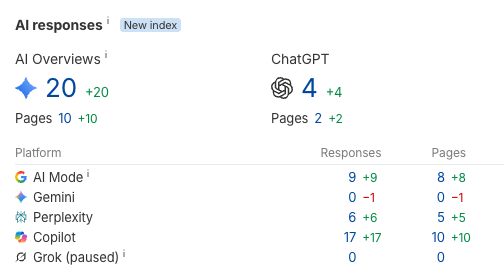
This campaign went beyond traditional SEO from day one. The GEO strategy was built to get the brand cited by AI-powered search platforms: Google AI Mode, ChatGPT, Perplexity, Gemini, and Copilot.
By August 2026, independent Semrush brand-performance tracking confirmed category dominance:
- 25.5% AI share of voice, with the nearest named competitor at 3.3%. The brand’s share is larger than the next five competitors combined.
- 71.4% of all brand mentions in the category conversation (500 mentions vs. 90 for the next brand).
- Average AI answer position of 1.37, against 3.2 to 4.0 for every tracked competitor.
- 94% favorable sentiment across AI responses, with zero negative.
- Ranked #1 with 100% positive sentiment on 25+ non-branded buyer questions, including “Who are the best facade access partners for design-build contracts?” and “Which companies provide full lifecycle support for facade access?” These are the exact questions specifiers ask before shortlisting vendors.
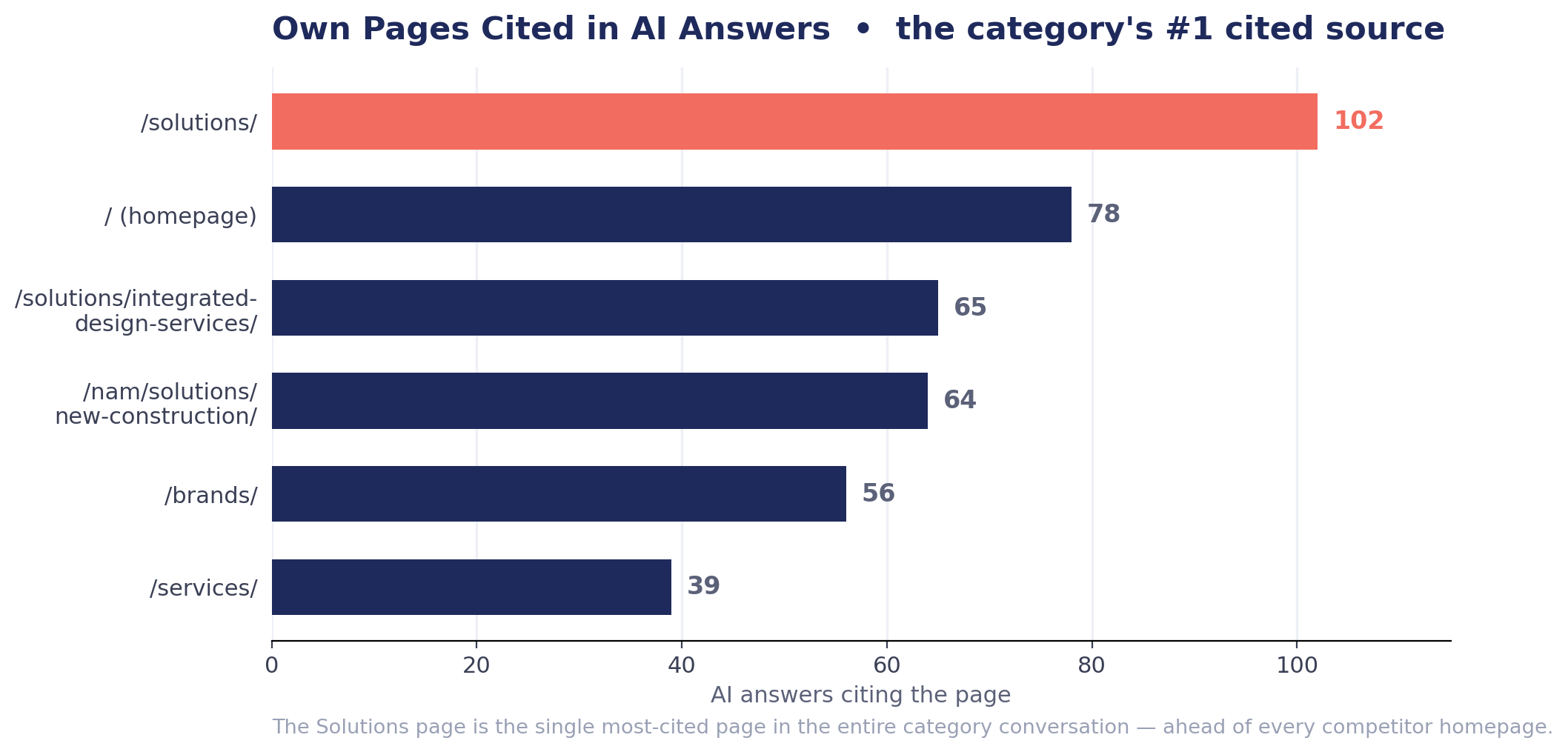
The single most-cited page in the entire category conversation is the brand’s own Solutions page, referenced in 102 AI answers. The Integrated Design Services page, built during this campaign, appears in 65. When AI platforms explain facade access to buyers, they now quote this brand’s pages more than any other source, including every competitor’s homepage.
From AI Visibility to Actual Leads
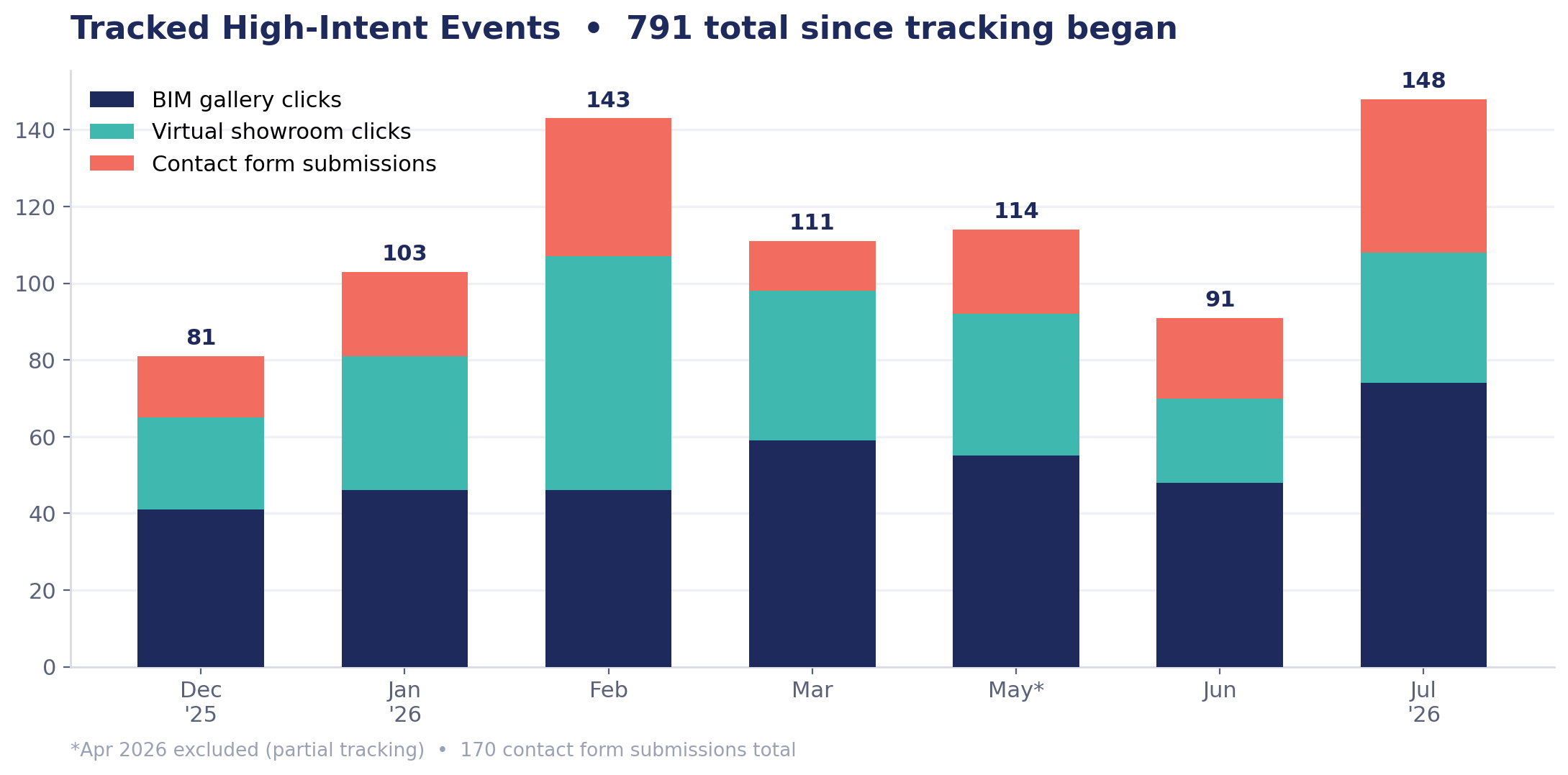
The GEO strategy didn’t just build visibility. It drove measurable business actions. Since conversion tracking went live in December 2025, the sites have generated 791 tracked high-intent events, including 170 contact form submissions, 369 BIM gallery clicks, and 252 virtual showroom clicks.
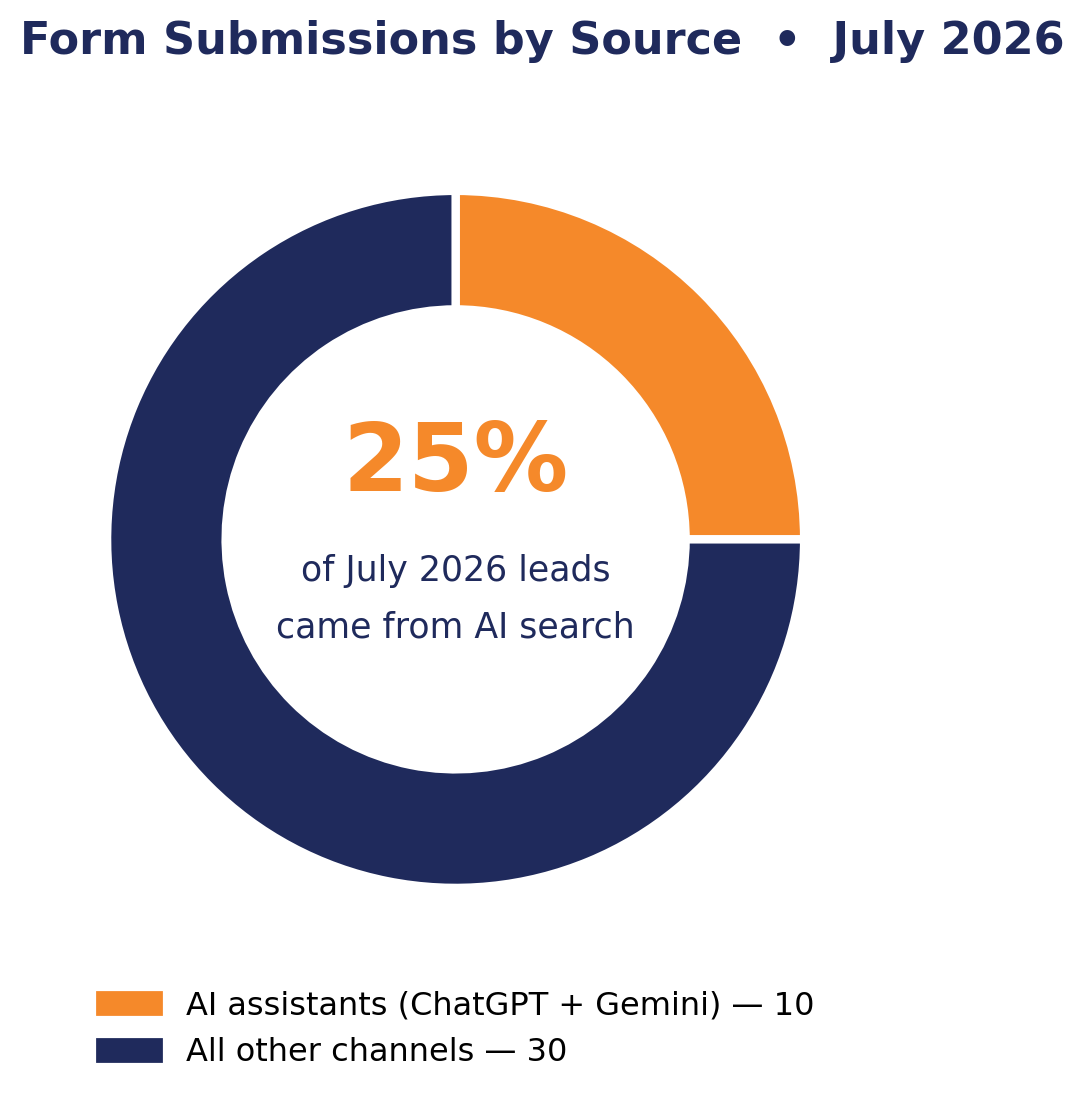
The clearest proof point came in July 2026: of the month’s 40 form submissions, 10 came from users referred directly by AI assistants, 9 from ChatGPT and 1 from Gemini. A quarter of the month’s leads arrived through AI search. GA4 now tracks “AI Assistant” as its own acquisition channel for this site, and it’s growing month over month.
For a B2B company whose average deal is a custom-engineered access system on a high-rise project, these aren’t newsletter signups. They’re specifiers and facility managers raising their hands.
The Takeaway
In twelve months, this brand went from 8 duplicated, thin websites to the most-visible and most-cited name in its category across both Google and AI search. Organic traffic nearly quadrupled. Product pages built from zero now lead the site. And AI platforms don’t just mention the brand. They recommend it first, cite its pages as the authority, and send ready-to-buy leads to its contact forms.
The work is still ongoing: schema rollout continues, the content workbook keeps feeding the blog pipeline, and citation building expands market by market. But the foundation compounds. Every new page enters an ecosystem that Google trusts and AI engines already quote.