
Case Study:
How Fixing a Hosting Problem Unlocked a 437% Jump in Google Clicks for an ELA Teaching Resource Brand
What drove the 437% increase in organic clicks?
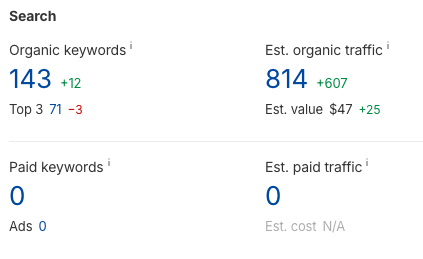
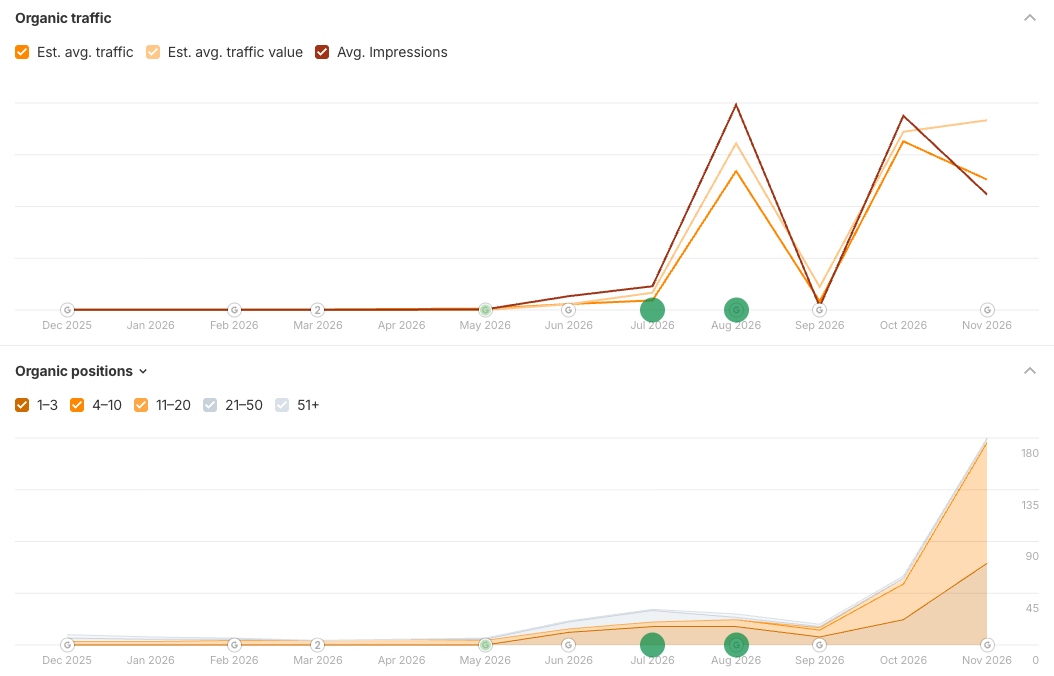
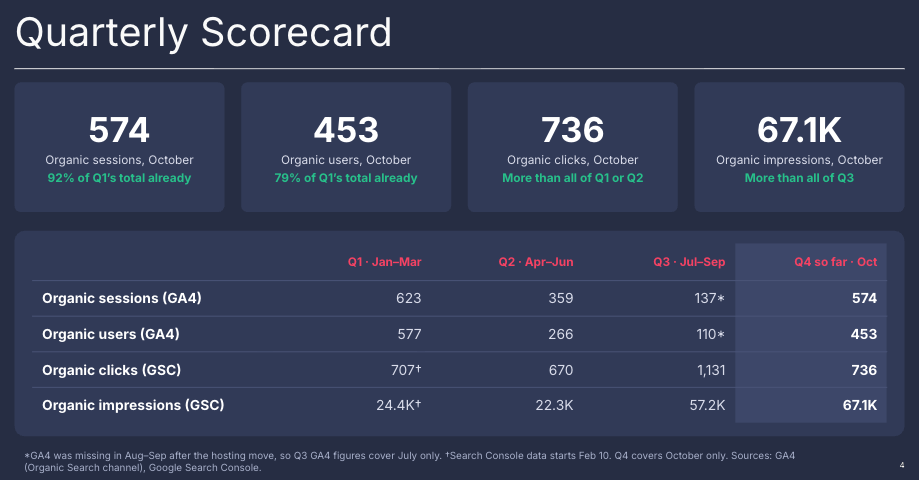
In June 2026, this teaching resource brand earned 137 clicks from Google. By October, that number reached 736. That's a 437% increase in four months. Search impressions climbed to 67.1K in October alone, which is more than the entire second quarter combined. Average position moved from 20.5 to 7.7, and the number of queries ranking on page one nearly tripled.
The content plan didn't change between June and October. We published the same number of blog articles and optimised the same number of product pages every month. What changed was the server those pages lived on.
About This ELA Teaching Resource Brand
This client creates English Language Arts (ELA) materials for middle and high school teachers. Their catalog is built around novel studies and unit plans for books teachers assign every year, such as The Maze Runner and Fahrenheit 451. They also sell grammar and writing resources. Their blog covers literary devices, essay writing and classroom strategies that teachers look up while planning lessons.
The brand has a loyal following. Teachers come back on their own, so direct traffic has always been strong. Organic search was a different story. Rankings peaked in late 2024 and dropped sharply in early 2025. They never fully recovered. When we started, organic sessions were down 23.54% year over year.
The Starting Point
Our first SEO audit showed a site with real demand but weak signals. Organic visitors stayed for only one to two seconds on average. Most rankings sat outside the top 10. The blog still used old date-based URLs like /2017/01/what-the-ditto-is-a-worksheet-episode-64.html. Both HTTP and HTTPS versions of the same product pages were indexed, so they split clicks between them.
The competitive analysis showed that no single competitor won everything. Some published at scale to capture long-tail searches. Others had years of backlinks behind them. A few leaned on Pinterest and image search. So we built a phased plan around what this brand could realistically win. Product pages came first because that’s where revenue happens. New blog content followed, mapped to what teachers search during lesson planning. Steady technical and on-page work ran underneath both.
The Challenge: Good Content on a Server That Kept Falling Over
I once had a back-and-forth on LinkedIn with someone who insisted that routine technical and on-page SEO checks don’t matter. Content is what matters, he said. I agree with half of that. Without content, Google and AI search engines have nothing to rank or cite. Content is the fuel.
But fuel doesn’t help if the engine won’t start.
By May, the content workbook was in motion. We had optimized about half of the priority product pages and were publishing new blog articles every month. Yet the website was a struggle to open. Visitors and Googlebot kept running into 500 errors. Most crawl errors in our site audit were 5xx server errors. Those come from the host, not from the website itself.
June made the problem impossible to ignore. On Network Solutions’ shared servers, the site took 4.4 seconds just to respond before anything loaded. Mobile Lighthouse tests timed out completely. Google slows down crawling on sites that respond this slowly, and that’s exactly what happened. A total of 281 pages sat in Search Console as “crawled, currently not indexed.” Organic clicks dropped to 137 for the month.
Seasonality and the May 2026 core update played a part too. Teachers search less over summer break, and the core update shook rankings across every industry. But hosting was the one problem we could actually fix. I’d seen plenty of Reddit threads from site owners with similar complaints about Network Solutions. After months of the campaign going nowhere, I pushed hard for a move.
Where I Rocked
Blog URL Migration and Cleanup
The effect on engagement showed up fast. Average engagement time per organic session went from 7.4 seconds in March to 43.6 seconds in April. By May, it reached 57.4 seconds. The visitors arriving from search were finally finding what they came for.
Product Page Content Optimization
We rewrote titles and meta descriptions on priority product pages to match how teachers actually search. Then we reworked the on-page copy, alt text and internal links on novel studies and unit plans. This product content optimization followed the content workbook in order of opportunity. We worked through four product pages a month.
New Blog Articles Built for Teacher Intent
Routine On-Page and Technical Checks
This is the part some people skip. Every month, I pulled every non-indexed URL in Search Console into one list with a named reason. We flagged 97 broken links and built a fix queue ordered by impact. We removed spammy internal links that were pointing nowhere useful. We also reviewed noindex tags so no money pages stayed hidden by plugin defaults.
It’s not glamorous on-page SEO work. But it’s the work that tells you when something bigger is wrong. Our routine checks kept pointing at the same culprit, and that’s how we confirmed the hosting problem.
Hosting Migration From Network Solutions to Hostinger
Before recommending the move, I squeezed what I could from the old server. We tuned caching, image and database plugins. It helped a little. The “crawled, currently not indexed” queue dropped from 281 to 182 in July. But the server itself was a hard ceiling that no plugin could get past.
In August, we moved the site to Hostinger. I audited the 263-URL sitemap on the new host, and the migration was finalized in September. One side effect was that the GA4 tracking code dropped off during the move. For August and September, we leaned on Search Console data until tracking was restored in October.
Start Your Success Story. Hire an SEO Expert Today!
You’ve seen the results. Now let’s talk about your website.
The Organic Results: Same Content, Different Server
| Metric | June 2026 Old host | October 2026 New host | Change |
|---|---|---|---|
| Organic clicks (GSC) | 137 | 736 | +437% |
| Average position (GSC) | 18.7 | 7.7 | 11 spots higher |
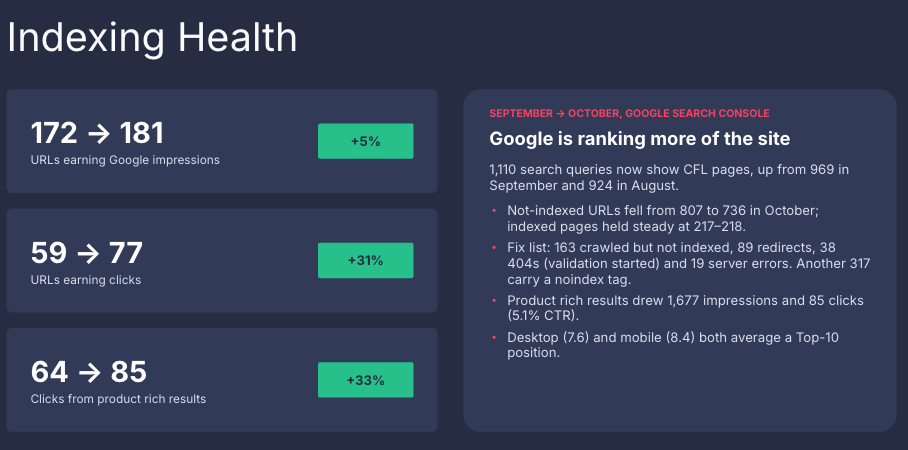
| Queries showing the site | 601 | 1,110 | +85% |
| Queries ranking in the top 10 | 241 | 722 | +200% |
The curve bent the moment the site moved. Clicks went from 192 in July to 342 in August. Then they reached 597 in September and 736 in October, the best month of the year. Average position more than halved in a single month, from 16.6 in August to 8.0 in September.
Impressions told the same story. In April, the site earned 5,780 impressions. In October, it earned 67.1K. That’s more than eleven times the visibility in six months.
Real visitors now get a fast site too. On the new host, Largest Contentful Paint sits at 1.4 seconds and Interaction to Next Paint at 36 milliseconds. Both rate “Good” in Google’s Core Web Vitals. Compare that to a server that once took 4.4 seconds just to respond.
Once GA4 tracking came back, the traffic data lined up with Search Console. Organic sessions in October were up 175% compared to October 2025. Organic search drove 30% of all sessions and 65% of non-paid sessions. Organic visitors also stayed 28 seconds per visit, compared to just 4 seconds from paid social.
Win #1: Evergreen Blog Content Finally Got Its Chance
The Character Traits guide moved from position 28.5 to 8.9 in the first month after the migration. Its clicks went from 16 in August to 79 in September, then 111 in October. The Informative Essay Examples article jumped from 9 clicks to 129 in one month. It’s now the most-clicked page on the site.
The content didn’t change overnight. Google’s ability to reach it did.
Win #2: Product Pages Are Showing Up as Rich Results
Product pages now appear in search with price and rating snippets. Clicks from these rich results grew from 42 in August to 85 in October. In October alone, they drew 1,677 impressions. The Pixar plot diagram product page now ranks in the top 5 for its main keywords.
Win #3: AI Search Started Paying Attention
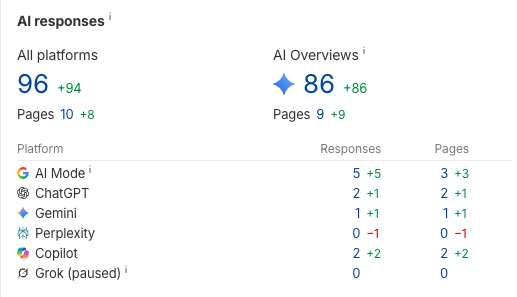
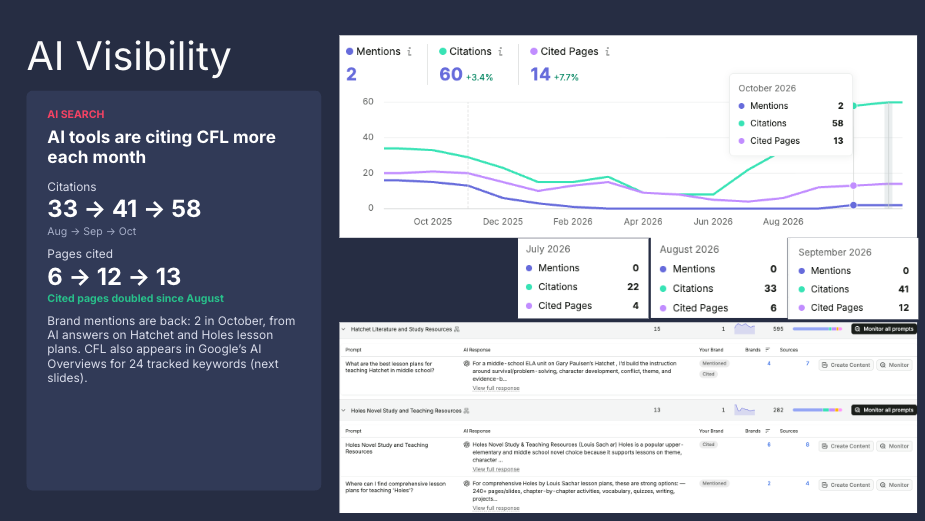
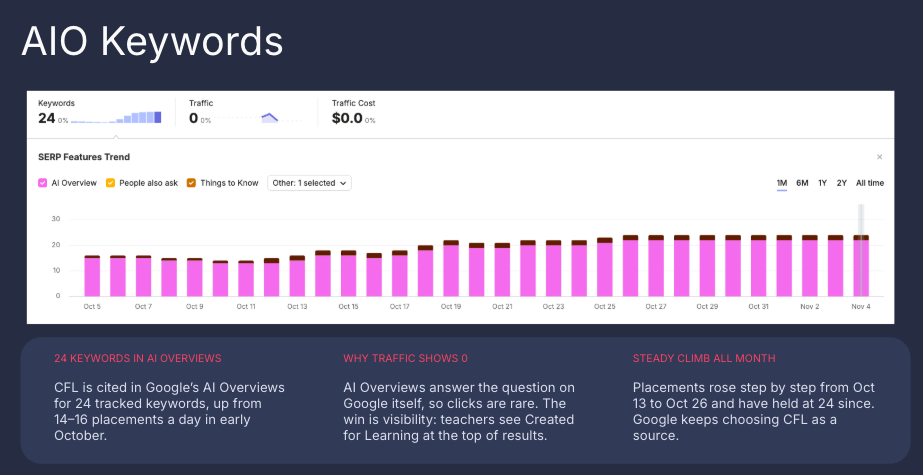
The same evergreen guides that rank on Google are the ones AI tools quote. AI citations grew from 33 in August to 58 in October. The number of cited pages doubled over the same period. The site now appears in Google’s AI Overviews for 24 tracked keywords. Search Console’s generative AI impressions rose 40% to 12.6K in October.
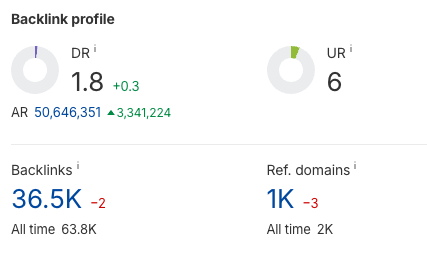
The brand also earned its first named mentions in AI answers for Hatchet and Holes lesson plans. That matters because teachers already use ChatGPT and Gemini to find teaching materials. Authority Score climbed from 14 to 17 during the same stretch, backed by 1.3K referring domains.
The Takeaway: Content Is King, but the Castle Needs a Foundation
Back to that LinkedIn debate. He was right that content wins. Every click in this case study came from a page someone planned and wrote with care. But content can only work when Google can reach it. Routine technical and on-page checks are how you find out whether your content is even getting a fair shot.
Without those checks, we might have kept publishing into a server that wasn’t delivering any of it. Instead, one hosting decision turned months of stalled work into the strongest search performance this site has seen all year.
The work is still ongoing. Next up is a Book Report lead magnet campaign, conversion tracking for sign-ups, and polishing layout shift on mobile. The foundation is finally solid, so every new page has a real chance to rank.
If your content is good but your numbers won’t move, start with the boring stuff. A technical SEO review is often where the answer is hiding. Let’s talk if you’d like a second pair of eyes on it.